Leptospira interrogans
Leptospira interrogans is a bacterial species that belongs to the genus Leptospira. It is a pathogenic bacterium that is known to cause leptospirosis, a zoonotic disease that affects both humans and animals.
Characteristics[edit]
Leptospira interrogans is a spirochete, a type of bacteria that is characterized by its long, spiral shape. It is Gram-negative, meaning it does not retain the violet stain used in the Gram stain method of bacterial identification.
The bacterium is aerobic, requiring oxygen to survive, and is motile, capable of moving independently. It is also chemotrophic, deriving energy from chemical reactions.
Pathogenicity[edit]
Leptospira interrogans is the primary cause of leptospirosis, a disease that is transmitted to humans through contact with the urine of infected animals or with a urine-contaminated environment. The disease is prevalent in tropical regions but can occur worldwide.
In humans, leptospirosis can range from a mild, flu-like illness to a severe disease that can cause jaundice, kidney failure, and meningitis. In animals, it can cause a wide range of symptoms, including fever, muscle pain, vomiting, and diarrhea.
Diagnosis and Treatment[edit]
Diagnosis of leptospirosis is typically based on clinical signs and confirmed by laboratory testing. The most common test is the Microscopic Agglutination Test (MAT), which detects antibodies against Leptospira interrogans in the patient's blood.
Treatment for leptospirosis typically involves antibiotics, such as doxycycline or penicillin. In severe cases, hospitalization may be required for supportive care.
Prevention[edit]
Prevention of leptospirosis involves avoiding contact with urine from infected animals and environments contaminated with such urine. Vaccines are available for some animals, such as dogs, but there is currently no human vaccine widely available.
See Also[edit]
 | This bacteria-related article is a stub. You can help WikiMD by expanding the page. |
 | This medical article is a stub. You can help WikiMD by expanding the page. |
Leptospira interrogans gallery[edit]
-
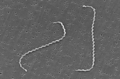 Leptospira interrogans strain RGA 01

Advertise on WikiMD — 81,000+ full articles, ~900,000 total pages, ~250 million page views. Global reach, limited time promotional rates from $1/page/day. Learn more · View stats

Translate page: - East Asian
中文,
日本,
한국어,
South Asian
हिन्दी,
தமிழ்,
తెలుగు,
Urdu,
ಕನ್ನಡ,
Southeast Asian
Indonesian,
Vietnamese,
Thai,
မြန်မာဘာသာ,
বাংলা
European
español,
Deutsch,
français,
Greek,
português do Brasil,
polski,
română,
русский,
Nederlands,
norsk,
svenska,
suomi,
Italian
Middle Eastern & African
عربى,
Turkish,
Persian,
Hebrew,
Afrikaans,
isiZulu,
Kiswahili,
Other
Bulgarian,
Hungarian,
Czech,
Swedish,
മലയാളം,
मराठी,
ਪੰਜਾਬੀ,
ગુજરાતી,
Portuguese,
Ukrainian
About WikiMD • Contact • Disclaimer • Privacy • Copyright • Site statistics
Some content and images may originate from Wikimedia Commons or Wikipedia and remain subject to their stated licenses. Unless otherwise noted, eligible WikiMD content is available under CC BY-SA 4.0.
WikiMD Wellnesspedia — Free health & wellness information for patients, students, and health professionals.

