Lassi
Lassi is a traditional dairy product originating from the Indian subcontinent. It is a popular drink made by blending yogurt with water, spices, and sometimes, fruit.
History[edit]
The origins of lassi are steeped in the history of the Indian subcontinent. It is believed to have been first consumed in Punjab, India, where it was used as a refreshing beverage during hot weather. The drink has been consumed in India for more than a thousand years and has been mentioned in ancient Sanskrit texts.
Preparation[edit]
Lassi is made by blending yogurt with water or milk. The mixture is then beaten to create a frothy consistency. Spices such as cumin, cardamom, or mint may be added for flavor. Some variations of lassi also include fruit, such as mango, strawberry, or banana.
There are two main types of lassi: sweet and salty. Sweet lassi is made by adding sugar or fruits, while salty lassi is made by adding salt and often, spices.
Consumption[edit]
Lassi is consumed all over the Indian subcontinent and has also gained popularity in other parts of the world. It is often served chilled and is a popular choice for a refreshing drink in the hot summer months. In India, it is commonly consumed with meals and is also a popular choice for breakfast.
Health Benefits[edit]
Lassi is rich in probiotics due to the fermentation process of the yogurt. These probiotics can aid in digestion and boost the immune system. The drink is also a good source of calcium, protein, and vitamin B12.
Cultural Significance[edit]
Lassi holds a significant place in the culture of the Indian subcontinent. It is often served during festivals and celebrations. In Punjab, a traditional festival called Lohri is celebrated with the consumption of lassi.

-
 Salt Lassi
 -
 Beauty Lachchi
 -
 Fat Free Lassi
 -
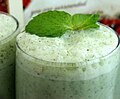 Mint Lassi
 -
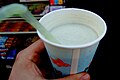 Bhang Lassi
 -
 Patiyala Lassi
 -
 Banaras ki Lassi
 -
 Odia Style Lassi


.jpg)


Medical Disclaimer: WikiMD is for informational purposes only and is not a substitute for professional medical advice. Content may be inaccurate or outdated and should not be used for diagnosis or treatment. Always consult your healthcare provider for medical decisions. Verify information with trusted sources such as CDC.gov and NIH.gov. By using this site, you agree that WikiMD is not liable for any outcomes related to its content. See full disclaimer.
Credits:Most images are courtesy of Wikimedia commons, and templates, categories Wikipedia, licensed under CC BY SA or similar.
Translate this page: - East Asian
中文,
日本,
한국어,
South Asian
हिन्दी,
தமிழ்,
తెలుగు,
Urdu,
ಕನ್ನಡ,
Southeast Asian
Indonesian,
Vietnamese,
Thai,
မြန်မာဘာသာ,
বাংলা
European
español,
Deutsch,
français,
Greek,
português do Brasil,
polski,
română,
русский,
Nederlands,
norsk,
svenska,
suomi,
Italian
Middle Eastern & African
عربى,
Turkish,
Persian,
Hebrew,
Afrikaans,
isiZulu,
Kiswahili,
Other
Bulgarian,
Hungarian,
Czech,
Swedish,
മലയാളം,
मराठी,
ਪੰਜਾਬੀ,
ગુજરાતી,
Portuguese,
Ukrainian
