Lacunar ligament
The Lacunar Ligament is an important anatomical structure in the human body, specifically within the inguinal region. It is a key component of the inguinal canal, which is a passage in the anterior abdominal wall. The Lacunar Ligament is also known as Gimbernat's ligament, named after the Spanish anatomist Antonio de Gimbernat.
Etymology[edit]
The term "Lacunar Ligament" is derived from the Latin word "lacuna" which means "gap" or "space". This is in reference to the ligament's location and function in the inguinal canal. The alternate name, Gimbernat's ligament, is named after Antonio de Gimbernat, a Spanish anatomist and surgeon who made significant contributions to the field of anatomy in the 18th century.
Anatomy[edit]
The Lacunar Ligament is a crescent-shaped band of connective tissue that extends from the pubic tubercle to the inguinal ligament. It forms the medial boundary of the femoral canal, which is the pathway for the femoral artery, femoral vein, and femoral nerve.
Clinical Significance[edit]
The Lacunar Ligament is of clinical significance due to its proximity to important vascular structures. It is often involved in surgical procedures involving the inguinal region, such as hernia repair. Knowledge of its anatomy is crucial in avoiding injury to the femoral vessels during such procedures.
Related Terms[edit]
See Also[edit]

This WikiMD article can only be edited by registered and verified editors. You can log in or register.
-
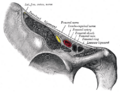 Lacunar ligament - anatomical illustration
 -
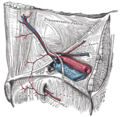 Lacunar ligament - detailed view
 -
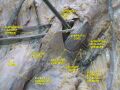 Lacunar ligament


Advertise on WikiMD — 81,000+ full articles, ~900,000 total pages, ~250 million page views. Global reach, limited time promotional rates from $1/page/day. Learn more · View stats


Translate page: - East Asian
中文,
日本,
한국어,
South Asian
हिन्दी,
தமிழ்,
తెలుగు,
Urdu,
ಕನ್ನಡ,
Southeast Asian
Indonesian,
Vietnamese,
Thai,
မြန်မာဘာသာ,
বাংলা
European
español,
Deutsch,
français,
Greek,
português do Brasil,
polski,
română,
русский,
Nederlands,
norsk,
svenska,
suomi,
Italian
Middle Eastern & African
عربى,
Turkish,
Persian,
Hebrew,
Afrikaans,
isiZulu,
Kiswahili,
Other
Bulgarian,
Hungarian,
Czech,
Swedish,
മലയാളം,
मराठी,
ਪੰਜਾਬੀ,
ગુજરાતી,
Portuguese,
Ukrainian
About WikiMD • Contact • Disclaimer • Privacy • Copyright • Site statistics
Some content and images may originate from Wikimedia Commons or Wikipedia and remain subject to their stated licenses. Unless otherwise noted, eligible WikiMD content is available under CC BY-SA 4.0.
WikiMD Wellnesspedia — Free health & wellness information for patients, students, and health professionals.

