Laboratory rat
The laboratory rat or lab rat is a rat of the species Rattus norvegicus which is bred and kept for scientific research. Laboratory rats have been used in medical research, genetics, pharmacology, and psychology experiments, among others, and have contributed immensely to the advancement of knowledge in various fields.
History[edit]
The history of the laboratory rat dates back to the 19th century when they were first used in scientific research. The albino variant of the Rattus norvegicus, developed from the Norway rat, became the first standardized laboratory animal.
Types[edit]
There are several strains of laboratory rats, each bred for specific research purposes. Some of the common strains include the Sprague Dawley, Wistar, and Long-Evans rats, differing in aspects like behavior, physiology, and susceptibility to diseases.
Use in Research[edit]
Laboratory rats play a crucial role in numerous research domains:
- In medical research, they are used to study diseases, test drugs, and investigate surgical procedures.
- In genetics, rats are used to study genetic disorders and the effects of gene manipulation.
- In pharmacology, they help in the development and testing of new drugs.
- In psychology, rats are used to study behavioral processes, including learning, memory, and emotion.
Genetics[edit]
The genome of the laboratory rat was fully sequenced in 2004, providing valuable insights into its genetics and making it a powerful model organism in genetic research.
Care and Handling[edit]
Proper care and handling of laboratory rats are crucial for their wellbeing and to ensure the reliability of research results. This includes providing a clean environment, proper nutrition, and humane handling practices.
Ethical Considerations[edit]
The use of laboratory rats in research comes with ethical considerations, including the necessity to minimize suffering and the use of alternatives whenever possible. The 3Rs (Replacement, Reduction, Refinement) are guiding principles for the ethical use of animals in research.
See Also[edit]

This WikiMD article can only be edited by registered and verified editors. You can log in or register.
- Laboratory_rat
-
 Laboratory_rat
 -
 Laboratory_rat
 -
 Laboratory_rat
 -
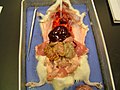 Laboratory_rat
 -
 Laboratory_rat
 -
 Laboratory_rat
 -
 Laboratory_rat
 -
 Laboratory_rat
 -
 Laboratory_rat
 -
 Laboratory_rat
 -
 Laboratory_rat
 -
 Laboratory_rat


Medical Disclaimer: WikiMD is for informational purposes only and is not a substitute for professional medical advice. Content may be inaccurate or outdated and should not be used for diagnosis or treatment. Always consult your healthcare provider for medical decisions. Verify information with trusted sources such as CDC.gov and NIH.gov. By using this site, you agree that WikiMD is not liable for any outcomes related to its content. See full disclaimer.
Credits:Most images are courtesy of Wikimedia commons, and templates, categories Wikipedia, licensed under CC BY SA or similar.
Translate page: - East Asian
中文,
日本,
한국어,
South Asian
हिन्दी,
தமிழ்,
తెలుగు,
Urdu,
ಕನ್ನಡ,
Southeast Asian
Indonesian,
Vietnamese,
Thai,
မြန်မာဘာသာ,
বাংলা
European
español,
Deutsch,
français,
Greek,
português do Brasil,
polski,
română,
русский,
Nederlands,
norsk,
svenska,
suomi,
Italian
Middle Eastern & African
عربى,
Turkish,
Persian,
Hebrew,
Afrikaans,
isiZulu,
Kiswahili,
Other
Bulgarian,
Hungarian,
Czech,
Swedish,
മലയാളം,
मराठी,
ਪੰਜਾਬੀ,
ગુજરાતી,
Portuguese,
Ukrainian

