Proximal tubule
The proximal tubule is a part of the nephron, the functional unit of the kidney. It is the first part of the renal tubule system and plays a crucial role in the reabsorption and secretion of various substances.
Structure[edit]
The proximal tubule is divided into two segments: the proximal convoluted tubule (PCT) and the proximal straight tubule (PST). The PCT is located in the renal cortex, while the PST extends into the renal medulla.
Function[edit]
The primary function of the proximal tubule is to reabsorb around 65% of the glomerular filtrate. This includes sodium, glucose, amino acids, and water. It also secretes substances such as hydrogen ions, ammonia, and urea.
Clinical Significance[edit]
Diseases of the proximal tubule can lead to various clinical conditions. For example, Fanconi syndrome is a disorder of the proximal tubule that results in the loss of essential substances in the urine. Renal tubular acidosis is another condition that can occur due to dysfunction of the proximal tubule.
See Also[edit]
References[edit]

This WikiMD article can only be edited by registered and verified editors. You can log in or register.
-
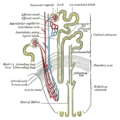 Proximal tubule
 -
 Complex proximal tubule with acid-base regulation
 -
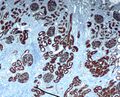 Proximal tubule CD10 immunohistochemistry
 -
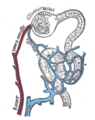 Proximal tubule
 -
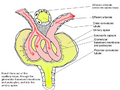 Glomerular physiology
 -
 Tight junction in proximal tubule
 -
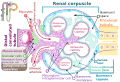 Renal corpuscle
 -
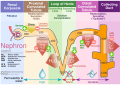 Nephron molar transport diagram


Medical Disclaimer: WikiMD is for informational purposes only and is not a substitute for professional medical advice. Content may be inaccurate or outdated and should not be used for diagnosis or treatment. Always consult your healthcare provider for medical decisions. Verify information with trusted sources such as CDC.gov and NIH.gov. By using this site, you agree that WikiMD is not liable for any outcomes related to its content. See full disclaimer.
Credits:Most images are courtesy of Wikimedia commons, and templates, categories Wikipedia, licensed under CC BY SA or similar.
Translate page: - East Asian
中文,
日本,
한국어,
South Asian
हिन्दी,
தமிழ்,
తెలుగు,
Urdu,
ಕನ್ನಡ,
Southeast Asian
Indonesian,
Vietnamese,
Thai,
မြန်မာဘာသာ,
বাংলা
European
español,
Deutsch,
français,
Greek,
português do Brasil,
polski,
română,
русский,
Nederlands,
norsk,
svenska,
suomi,
Italian
Middle Eastern & African
عربى,
Turkish,
Persian,
Hebrew,
Afrikaans,
isiZulu,
Kiswahili,
Other
Bulgarian,
Hungarian,
Czech,
Swedish,
മലയാളം,
मराठी,
ਪੰਜਾਬੀ,
ગુજરાતી,
Portuguese,
Ukrainian

