Karnıyarık
Karnıyarık is a traditional Turkish dish that is popular throughout Turkey. The name Karnıyarık translates to "split belly", which describes the dish's preparation method of splitting aubergines and stuffing them.
Ingredients and Preparation[edit]
The main ingredients of Karnıyarık are aubergines, minced meat, onions, garlic, tomatoes, parsley, and various spices. The aubergines are first fried in oil, then slit open and stuffed with a mixture of sautéed minced meat, onions, tomatoes, and spices. The dish is then baked in an oven until the aubergines are soft and the flavors have melded together.
Variations[edit]
There are several variations of Karnıyarık throughout Turkey and the Middle East. Some versions include additional ingredients such as bell peppers, cheese, or pine nuts. In some regions, Karnıyarık is served with yogurt on the side.
Cultural Significance[edit]
Karnıyarık is a staple dish in Turkish cuisine and is often served at home for dinner. It is also commonly found in Turkish restaurants around the world. The dish is a symbol of the rich culinary history of Turkey and its use of fresh, local ingredients.
See Also[edit]
 | This Turkish cuisine article is a stub. You can help WikiMD by expanding the page. |

-
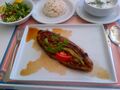 Karnıyarık

Advertise on WikiMD — 81,000+ full articles, ~900,000 total pages, ~250 million page views. Global reach, limited time promotional rates from $1/page/day. Learn more · View stats

Medical Disclaimer: WikiMD is for informational purposes only and is not a substitute for professional medical advice. Content may be inaccurate or outdated and should not be used for diagnosis or treatment. Always consult your healthcare provider for medical decisions. Verify information with trusted sources such as CDC.gov and NIH.gov. By using this site, you agree that WikiMD is not liable for any outcomes related to its content. See full disclaimer.
Credits:Most images are courtesy of Wikimedia commons, and templates, categories Wikipedia, licensed under CC BY SA or similar.
Translate page: - East Asian
中文,
日本,
한국어,
South Asian
हिन्दी,
தமிழ்,
తెలుగు,
Urdu,
ಕನ್ನಡ,
Southeast Asian
Indonesian,
Vietnamese,
Thai,
မြန်မာဘာသာ,
বাংলা
European
español,
Deutsch,
français,
Greek,
português do Brasil,
polski,
română,
русский,
Nederlands,
norsk,
svenska,
suomi,
Italian
Middle Eastern & African
عربى,
Turkish,
Persian,
Hebrew,
Afrikaans,
isiZulu,
Kiswahili,
Other
Bulgarian,
Hungarian,
Czech,
Swedish,
മലയാളം,
मराठी,
ਪੰਜਾਬੀ,
ગુજરાતી,
Portuguese,
Ukrainian

