Karintō
Karintō is a traditional Japanese snack made of deep-fried dough coated in brown sugar. The snack has a history dating back to the Edo period, and it is still widely enjoyed in Japan today.
History[edit]
Karintō was first created during the Edo period in Japan. The snack was originally made by street vendors and was popular among the common people. Over time, it has become a staple snack in Japanese households and is often served with tea.
Preparation[edit]
The main ingredients of Karintō are wheat flour, yeast, and brown sugar. The dough is made by mixing the flour and yeast together, then adding water to form a thick paste. This paste is then shaped into small pieces and deep-fried until they become crispy. After frying, the pieces are coated in a syrup made from brown sugar, giving them a sweet and slightly bitter taste.
Varieties[edit]
There are several varieties of Karintō available in Japan. Some of the most popular ones include black Karintō, which is made with black sugar, and white Karintō, which is made with white sugar. There are also regional variations, such as Okinawan Karintō, which is made with local ingredients like sweet potato and millet.
Cultural Significance[edit]
Karintō is not just a snack in Japan, but also a part of the country's cultural heritage. It is often used as a gift during the New Year and other special occasions. In addition, it is also a common item in Japanese tea ceremonies, where it is served with matcha tea.
See Also[edit]

-
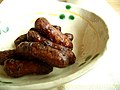 Karintō

Ad. Transform your life with W8MD's
GLP-1 weight loss injections special from $29.99 with insurance
|
WikiMD Medical Encyclopedia |
Medical Disclaimer: WikiMD is for informational purposes only and is not a substitute for professional medical advice. Content may be inaccurate or outdated and should not be used for diagnosis or treatment. Always consult your healthcare provider for medical decisions. Verify information with trusted sources such as CDC.gov and NIH.gov. By using this site, you agree that WikiMD is not liable for any outcomes related to its content. See full disclaimer.
Credits:Most images are courtesy of Wikimedia commons, and templates, categories Wikipedia, licensed under CC BY SA or similar.
Translate this page: - East Asian
中文,
日本,
한국어,
South Asian
हिन्दी,
தமிழ்,
తెలుగు,
Urdu,
ಕನ್ನಡ,
Southeast Asian
Indonesian,
Vietnamese,
Thai,
မြန်မာဘာသာ,
বাংলা
European
español,
Deutsch,
français,
Greek,
português do Brasil,
polski,
română,
русский,
Nederlands,
norsk,
svenska,
suomi,
Italian
Middle Eastern & African
عربى,
Turkish,
Persian,
Hebrew,
Afrikaans,
isiZulu,
Kiswahili,
Other
Bulgarian,
Hungarian,
Czech,
Swedish,
മലയാളം,
मराठी,
ਪੰਜਾਬੀ,
ગુજરાતી,
Portuguese,
Ukrainian
