Jjigae
Jjigae is a term used in Korean cuisine to describe a variety of stew-like dishes. The word "jjigae" is often translated as "stew", but the dishes it refers to can vary widely in terms of ingredients, preparation methods, and cultural significance.
Etymology[edit]
The term "jjigae" comes from the Korean language, and is derived from the verb "jjigae-da", which means "to stew" or "to boil". It is often used to refer to dishes that are simmered or boiled for a long time, and can include a wide variety of ingredients.
Types of Jjigae[edit]
There are many different types of jjigae, each with its own unique set of ingredients and preparation methods. Some of the most popular types include:
- Kimchi jjigae: This is a spicy stew made with kimchi, a traditional Korean fermented vegetable dish. It often includes other ingredients such as tofu, pork, and onions.
- Doenjang jjigae: This is a stew made with doenjang, a type of fermented soybean paste. It often includes vegetables, seafood, or meat.
- Sundubu jjigae: This is a spicy stew made with soft tofu, seafood, and vegetables. It is often served in a hot stone pot.
Cultural Significance[edit]
Jjigae is a staple dish in Korean cuisine, and is often served as part of a meal along with rice and banchan, or side dishes. It is often eaten with a spoon, and is typically served hot, often still bubbling from the heat of cooking.
See Also[edit]

Jjigae[edit]
-
Dubu Jjigae
-
Sundubu Jjigae
-
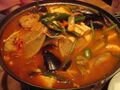 Dongtae Jjigae
 -
Dubu Jjigae at Washoku-Sato


Medical Disclaimer: WikiMD is for informational purposes only and is not a substitute for professional medical advice. Content may be inaccurate or outdated and should not be used for diagnosis or treatment. Always consult your healthcare provider for medical decisions. Verify information with trusted sources such as CDC.gov and NIH.gov. By using this site, you agree that WikiMD is not liable for any outcomes related to its content. See full disclaimer.
Credits:Most images are courtesy of Wikimedia commons, and templates, categories Wikipedia, licensed under CC BY SA or similar.
Translate page: - East Asian
中文,
日本,
한국어,
South Asian
हिन्दी,
தமிழ்,
తెలుగు,
Urdu,
ಕನ್ನಡ,
Southeast Asian
Indonesian,
Vietnamese,
Thai,
မြန်မာဘာသာ,
বাংলা
European
español,
Deutsch,
français,
Greek,
português do Brasil,
polski,
română,
русский,
Nederlands,
norsk,
svenska,
suomi,
Italian
Middle Eastern & African
عربى,
Turkish,
Persian,
Hebrew,
Afrikaans,
isiZulu,
Kiswahili,
Other
Bulgarian,
Hungarian,
Czech,
Swedish,
മലയാളം,
मराठी,
ਪੰਜਾਬੀ,
ગુજરાતી,
Portuguese,
Ukrainian


.jpg)