Jaagsiekte sheep retrovirus
Jaagsiekte Sheep Retrovirus (JSRV) is a betaretrovirus that causes a contagious lung cancer in sheep known as ovine pulmonary adenocarcinoma (OPA), or more commonly, Jaagsiekte. The disease is characterized by the development of tumors in the lungs, leading to a progressive respiratory failure. JSRV is of significant concern in the sheep farming industry due to its impact on animal health and welfare, as well as its economic implications.
Etiology[edit]
JSRV is a retrovirus, which means it is an RNA virus that inserts a DNA copy of its genome into the host cell in order to replicate. This virus specifically targets the cells lining the small airways of the sheep's lungs. The integration of the viral genome into the host cell's DNA can lead to uncontrolled cell division and tumor formation.
Transmission[edit]
The primary mode of transmission of JSRV is through the inhalation of aerosolized particles containing the virus, which are produced by infected sheep through respiratory secretions. The disease is highly contagious among sheep, and the close contact within flocks facilitates its spread. Vertical transmission from ewes to lambs has been suggested but is not well documented.
Clinical Signs[edit]
Infected sheep may initially show no symptoms, but as the disease progresses, they develop a chronic, progressive respiratory illness. Clinical signs include:
- Weight loss
- Labored breathing or dyspnea
- A notable increase in nasal discharge, which may be frothy
- Reduced exercise tolerance
In advanced stages, the disease can lead to severe respiratory distress and eventually death.
Diagnosis[edit]
Diagnosis of OPA caused by JSRV can be challenging due to the similarity of its symptoms to other respiratory diseases in sheep. Diagnostic methods include:
- Post-mortem examination revealing characteristic tumors in the lungs
- Histopathological examination of lung tissue
- Molecular techniques such as PCR to detect JSRV DNA
- Immunohistochemistry to identify viral proteins in tissue samples
Prevention and Control[edit]
Currently, there is no vaccine available for JSRV. Control measures focus on preventing the spread of the virus within and between flocks. These measures include:
- Isolating and culling infected animals
- Avoiding the introduction of new animals into the flock without proper quarantine
- Implementing biosecurity measures to reduce the risk of disease transmission
Research and Implications[edit]
Research on JSRV has not only focused on understanding and controlling the disease in sheep but also on the implications for human health. JSRV is of interest in the study of lung cancer, as it is one of the few viruses known to induce lung cancer in its host. Studies on JSRV may provide insights into the mechanisms of virus-induced cancer and potential therapeutic strategies.
See Also[edit]
 | This medical article is a stub. You can help WikiMD by expanding the page. |
-
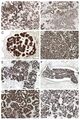 Jaagsiekte sheep retrovirus
 -
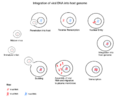 Integration of viral DNA into host genome
 -
Jaagsiekte sheep retrovirus


Medical Disclaimer: WikiMD is for informational purposes only and is not a substitute for professional medical advice. Content may be inaccurate or outdated and should not be used for diagnosis or treatment. Always consult your healthcare provider for medical decisions. Verify information with trusted sources such as CDC.gov and NIH.gov. By using this site, you agree that WikiMD is not liable for any outcomes related to its content. See full disclaimer.
Credits:Most images are courtesy of Wikimedia commons, and templates, categories Wikipedia, licensed under CC BY SA or similar.
Translate page: - East Asian
中文,
日本,
한국어,
South Asian
हिन्दी,
தமிழ்,
తెలుగు,
Urdu,
ಕನ್ನಡ,
Southeast Asian
Indonesian,
Vietnamese,
Thai,
မြန်မာဘာသာ,
বাংলা
European
español,
Deutsch,
français,
Greek,
português do Brasil,
polski,
română,
русский,
Nederlands,
norsk,
svenska,
suomi,
Italian
Middle Eastern & African
عربى,
Turkish,
Persian,
Hebrew,
Afrikaans,
isiZulu,
Kiswahili,
Other
Bulgarian,
Hungarian,
Czech,
Swedish,
മലയാളം,
मराठी,
ਪੰਜਾਬੀ,
ગુજરાતી,
Portuguese,
Ukrainian


