Irrigation
Irrigation is the process of applying controlled amounts of water to plants at needed intervals. Irrigation helps to grow agricultural crops, maintain landscapes, and revegetate disturbed soils in dry areas and during periods of less than average rainfall.
History[edit]
The practice of irrigation likely started in Mesopotamia and Egypt around 6000 B.C. due to the necessity of providing water for crops in dry areas. The earliest form of irrigation was probably ditch irrigation, where ditches were dug in a field and filled with water.
Types of Irrigation[edit]
There are several types of irrigation systems, including:
- Surface Irrigation: Water is distributed over the soil surface by gravity.
- Drip Irrigation: Water is delivered at or near the root zone of plants, drop by drop.
- Sprinkler Irrigation: Water is sprayed, or "sprinkled," through the air to the soil.
- Center Pivot Irrigation: Water is distributed by a system of sprinklers that move on wheeled towers in a circular pattern.
Benefits and Drawbacks[edit]
Irrigation has both benefits and drawbacks. It can increase crop yields and quality, provide a reliable water source, and allow for farming in dry climates. However, it can also lead to waterlogging, soil degradation, and the spread of waterborne diseases.
Environmental Impact[edit]
Irrigation can have significant impacts on the environment. It can lead to the depletion of water resources, degradation of soil and water quality, and loss of biodiversity. It can also contribute to climate change by increasing evaporation and greenhouse gas emissions.
See Also[edit]
 | This medical article is a stub. You can help WikiMD by expanding the page. |
-
 Fields SW from Sevilla
 -
 Share of agricultural land which is irrigated
 -
 Area Equipped For Irrigation By Region
 -
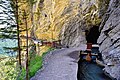 Bisse
Bisse -
 Pump-enabled Riverside Irrigation in Comilla, Bangladesh
 -
 Vale do São Francisco Pernanbuco
 -
 Level Basin Flood Irrigation
 -
 Residential flood irrigation in Phoenix, Arizona
 -
 Dripper with drop
 -
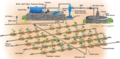 Drip irrigation
 -
 Crop sprinklers Rio Vista California
 -
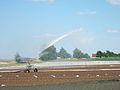 Travelling Sprinkler


Medical Disclaimer: WikiMD is for informational purposes only and is not a substitute for professional medical advice. Content may be inaccurate or outdated and should not be used for diagnosis or treatment. Always consult your healthcare provider for medical decisions. Verify information with trusted sources such as CDC.gov and NIH.gov. By using this site, you agree that WikiMD is not liable for any outcomes related to its content. See full disclaimer.
Credits:Most images are courtesy of Wikimedia commons, and templates, categories Wikipedia, licensed under CC BY SA or similar.
Translate this page: - East Asian
中文,
日本,
한국어,
South Asian
हिन्दी,
தமிழ்,
తెలుగు,
Urdu,
ಕನ್ನಡ,
Southeast Asian
Indonesian,
Vietnamese,
Thai,
မြန်မာဘာသာ,
বাংলা
European
español,
Deutsch,
français,
Greek,
português do Brasil,
polski,
română,
русский,
Nederlands,
norsk,
svenska,
suomi,
Italian
Middle Eastern & African
عربى,
Turkish,
Persian,
Hebrew,
Afrikaans,
isiZulu,
Kiswahili,
Other
Bulgarian,
Hungarian,
Czech,
Swedish,
മലയാളം,
मराठी,
ਪੰਜਾਬੀ,
ગુજરાતી,
Portuguese,
Ukrainian
