Interventricular foramina (neuroanatomy)
The interventricular foramina, also known as the foramina of Monro, are small openings that connect the lateral ventricles of the brain with the third ventricle. These foramina play a crucial role in the circulation of cerebrospinal fluid (CSF) within the brain.
Anatomy[edit]
The interventricular foramina are located in the midline of the brain, connecting the lateral ventricles to the third ventricle. Each foramen is situated between the anterior horn of the lateral ventricle and the anterior end of the third ventricle. They are named after Alexander Monro, a Scottish anatomist who first described them in the 18th century.
The foramina are approximately 1-2 mm in diameter and are surrounded by a ring of tissue known as the choroid plexus. The choroid plexus is responsible for the production of CSF, which fills the ventricles and provides cushioning and support to the brain.
Function[edit]
The interventricular foramina serve as channels for the flow of CSF between the lateral ventricles and the third ventricle. CSF is produced by the choroid plexus within the lateral ventricles and needs to circulate throughout the ventricular system to maintain a stable environment for the brain.
CSF flows from the lateral ventricles into the third ventricle through the interventricular foramina. From the third ventricle, it continues its circulation through the cerebral aqueduct, which connects the third ventricle to the fourth ventricle. Finally, CSF exits the fourth ventricle and enters the subarachnoid space surrounding the brain and spinal cord.
Clinical Significance[edit]
The interventricular foramina can be affected by various pathological conditions, leading to disruptions in CSF circulation. One such condition is hydrocephalus, which is characterized by an abnormal accumulation of CSF within the ventricles. This can occur due to blockage or narrowing of the interventricular foramina, preventing the normal flow of CSF.
In cases of hydrocephalus, increased pressure within the ventricles can cause symptoms such as headaches, nausea, and changes in mental status. Treatment options may include surgical intervention to bypass the obstruction or the placement of a shunt to redirect the excess CSF to another part of the body.
Conclusion[edit]
The interventricular foramina are essential structures in the neuroanatomy of the brain. They provide a pathway for the circulation of CSF between the lateral ventricles and the third ventricle. Understanding the anatomy and function of these foramina is crucial in diagnosing and managing conditions that affect CSF circulation, such as hydrocephalus.
For more information on related topics, you can visit the following links: - Lateral ventricles (neuroanatomy) - Third ventricle (neuroanatomy) - Cerebrospinal fluid (CSF) - Hydrocephalus
-
 Interventricular foramina (neuroanatomy)
 -
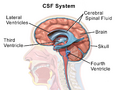 Cerebrospinal system diagram


Medical Disclaimer: WikiMD is for informational purposes only and is not a substitute for professional medical advice. Content may be inaccurate or outdated and should not be used for diagnosis or treatment. Always consult your healthcare provider for medical decisions. Verify information with trusted sources such as CDC.gov and NIH.gov. By using this site, you agree that WikiMD is not liable for any outcomes related to its content. See full disclaimer.
Credits:Most images are courtesy of Wikimedia commons, and templates, categories Wikipedia, licensed under CC BY SA or similar.
Translate page: - East Asian
中文,
日本,
한국어,
South Asian
हिन्दी,
தமிழ்,
తెలుగు,
Urdu,
ಕನ್ನಡ,
Southeast Asian
Indonesian,
Vietnamese,
Thai,
မြန်မာဘာသာ,
বাংলা
European
español,
Deutsch,
français,
Greek,
português do Brasil,
polski,
română,
русский,
Nederlands,
norsk,
svenska,
suomi,
Italian
Middle Eastern & African
عربى,
Turkish,
Persian,
Hebrew,
Afrikaans,
isiZulu,
Kiswahili,
Other
Bulgarian,
Hungarian,
Czech,
Swedish,
മലയാളം,
मराठी,
ਪੰਜਾਬੀ,
ગુજરાતી,
Portuguese,
Ukrainian

