International Office of Public Hygiene
| International Office of Public Hygiene | |
|---|---|

| |
| Formation | 1907 |
| Type | N/A |
| Headquarters | Paris, France |
| Membership | N/A |
| Language | French |
| Leader title | N/A |
| Leader name | N/A |
| Website | N/A |
The International Office of Public Hygiene (French: Office international d'hygiène publique, OIHP) was an international organization established in 1907 to promote and coordinate public health efforts across nations. It was one of the first global health organizations and played a crucial role in the development of international health regulations and cooperation.
History[edit]
The OIHP was founded in response to the growing need for international collaboration in combating infectious diseases, which were spreading rapidly due to increased global travel and trade. The organization was headquartered in Paris, France, and its official language was French.
The OIHP was instrumental in the development of international health regulations, which aimed to standardize and improve public health measures across different countries. It worked closely with the League of Nations Health Organization and later became part of the World Health Organization (WHO) when it was dissolved in 1946.
Functions and Achievements[edit]
The primary functions of the OIHP included:
- Collecting and disseminating information on infectious diseases and public health measures.
- Coordinating international efforts to control and prevent the spread of diseases such as cholera, plague, and yellow fever.
- Developing international health regulations to standardize quarantine measures and other public health practices.
One of the significant achievements of the OIHP was the establishment of a network of national public health offices, which facilitated the exchange of information and best practices among countries. This network laid the groundwork for the global health surveillance systems that are in place today.
Legacy[edit]
The OIHP's work laid the foundation for modern international health organizations. Its emphasis on international cooperation and standardized health regulations influenced the creation of the World Health Organization in 1948, which absorbed many of the functions and responsibilities of the OIHP.
Also see[edit]
References[edit]
- David P.,
 SARS, Governance and the Globalization of Disease,

 Palgrave Macmillan,
 2004,


 ISBN 978-1-4039-4393-0,
- Howard-Jones, Norman,
 The scientific background of the International Sanitary Conferences, 1851-1938,
 World Health Organization,
 1975,
International Office of Public Hygiene[edit]
-
 Flag of Hejaz (1917)
 -
 League of Nations Organization
 -
 Flag of the Congo Free State
 -
 Flag of France (1794–1815, 1830–1958)
 -
Flag of France (1794–1815, 1830–1958)
-
Flag of France (1794–1815, 1830–1958)
-
Flag of France (1794–1815, 1830–1958)
-
Flag of Hejaz (1917)
-
 Flag of South Africa (1928–1994)
 -
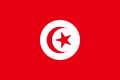 Flag of Tunisia (1959–1999)
.svg)


.svg)
.svg)
Ad. Transform your life with W8MD's Budget GLP-1 injections from $75


W8MD offers a medical weight loss program to lose weight in Philadelphia. Our physician-supervised medical weight loss provides:
- Weight loss injections in NYC (generic and brand names):
- Zepbound / Mounjaro, Wegovy / Ozempic, Saxenda
- Most insurances accepted or discounted self-pay rates. We will obtain insurance prior authorizations if needed.
- Generic GLP1 weight loss injections from $75 for the starting dose.
- Also offer prescription weight loss medications including Phentermine, Qsymia, Diethylpropion, Contrave etc.
NYC weight loss doctor appointmentsNYC weight loss doctor appointments
Start your NYC weight loss journey today at our NYC medical weight loss and Philadelphia medical weight loss clinics.
- Call 718-946-5500 to lose weight in NYC or for medical weight loss in Philadelphia 215-676-2334.
- Tags:NYC medical weight loss, Philadelphia lose weight Zepbound NYC, Budget GLP1 weight loss injections, Wegovy Philadelphia, Wegovy NYC, Philadelphia medical weight loss, Brookly weight loss and Wegovy NYC


|
WikiMD's Wellness Encyclopedia |
| Let Food Be Thy Medicine Medicine Thy Food - Hippocrates |
Medical Disclaimer: WikiMD is not a substitute for professional medical advice. The information on WikiMD is provided as an information resource only, may be incorrect, outdated or misleading, and is not to be used or relied on for any diagnostic or treatment purposes. Please consult your health care provider before making any healthcare decisions or for guidance about a specific medical condition. WikiMD expressly disclaims responsibility, and shall have no liability, for any damages, loss, injury, or liability whatsoever suffered as a result of your reliance on the information contained in this site. By visiting this site you agree to the foregoing terms and conditions, which may from time to time be changed or supplemented by WikiMD. If you do not agree to the foregoing terms and conditions, you should not enter or use this site. See full disclaimer.
Credits:Most images are courtesy of Wikimedia commons, and templates, categories Wikipedia, licensed under CC BY SA or similar.
Translate this page: - East Asian
中文,
日本,
한국어,
South Asian
हिन्दी,
தமிழ்,
తెలుగు,
Urdu,
ಕನ್ನಡ,
Southeast Asian
Indonesian,
Vietnamese,
Thai,
မြန်မာဘာသာ,
বাংলা
European
español,
Deutsch,
français,
Greek,
português do Brasil,
polski,
română,
русский,
Nederlands,
norsk,
svenska,
suomi,
Italian
Middle Eastern & African
عربى,
Turkish,
Persian,
Hebrew,
Afrikaans,
isiZulu,
Kiswahili,
Other
Bulgarian,
Hungarian,
Czech,
Swedish,
മലയാളം,
मराठी,
ਪੰਜਾਬੀ,
ગુજરાતી,
Portuguese,
Ukrainian
