Inocarpus fagifer
A tropical tree species known for its edible seeds
Inocarpus fagifer, commonly known as the Tahitian chestnut, is a tropical tree species belonging to the Fabaceae family. It is native to the Pacific Islands and is widely cultivated for its edible seeds.
Description[edit]
Inocarpus fagifer is a medium to large-sized tree, reaching heights of 20 to 30 meters. The tree has a dense, spreading canopy and a straight trunk. The leaves are simple, alternate, and oblong, with a glossy green appearance. The flowers are small, white, and fragrant, arranged in axillary racemes.
The fruit is a large, oblong drupe, containing a single seed. The seed is encased in a fibrous husk and is edible when cooked. The fruit is green when immature and turns brown as it ripens.
Distribution and Habitat[edit]
Inocarpus fagifer is native to the tropical regions of the Pacific Islands, including Fiji, Samoa, and Tonga. It thrives in coastal areas and lowland forests, often found near riverbanks and in swampy areas. The tree is well adapted to a range of soil types, including sandy and clay soils.
Uses[edit]
The seeds of Inocarpus fagifer are a traditional food source in many Pacific Island cultures. They are typically boiled or roasted before consumption. The seeds are rich in carbohydrates and provide a valuable source of nutrition.
In addition to its culinary uses, the wood of Inocarpus fagifer is used in construction and for making tools and utensils. The tree also has cultural significance in many Pacific Island communities, often associated with traditional ceremonies and rituals.
Cultivation[edit]
Inocarpus fagifer is cultivated in tropical regions around the world. It is propagated from seeds, which are planted in well-drained soil. The tree requires a warm, humid climate and is sensitive to frost. Regular watering is necessary during the establishment phase, but mature trees are relatively drought-tolerant.
Ecological Importance[edit]
Inocarpus fagifer plays a significant role in its native ecosystems. It provides habitat and food for various animal species, including birds and insects. The tree also contributes to soil stabilization and the prevention of erosion in coastal areas.
Related Pages[edit]
- Inocarpus fagifer
-
 Inocarpus edulis
 -
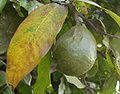 Inocarpus edulis, fruit


Medical Disclaimer: WikiMD is for informational purposes only and is not a substitute for professional medical advice. Content may be inaccurate or outdated and should not be used for diagnosis or treatment. Always consult your healthcare provider for medical decisions. Verify information with trusted sources such as CDC.gov and NIH.gov. By using this site, you agree that WikiMD is not liable for any outcomes related to its content. See full disclaimer.
Credits:Most images are courtesy of Wikimedia commons, and templates, categories Wikipedia, licensed under CC BY SA or similar.
Translate page: - East Asian
中文,
日本,
한국어,
South Asian
हिन्दी,
தமிழ்,
తెలుగు,
Urdu,
ಕನ್ನಡ,
Southeast Asian
Indonesian,
Vietnamese,
Thai,
မြန်မာဘာသာ,
বাংলা
European
español,
Deutsch,
français,
Greek,
português do Brasil,
polski,
română,
русский,
Nederlands,
norsk,
svenska,
suomi,
Italian
Middle Eastern & African
عربى,
Turkish,
Persian,
Hebrew,
Afrikaans,
isiZulu,
Kiswahili,
Other
Bulgarian,
Hungarian,
Czech,
Swedish,
മലയാളം,
मराठी,
ਪੰਜਾਬੀ,
ગુજરાતી,
Portuguese,
Ukrainian

