Speciation
Speciation is the evolutionary process by which populations evolve to become distinct species. The biologist Ornithologist Ernst Mayr formulated the standard definition of species as groups of actually or potentially interbreeding natural populations, which are reproductively isolated from other such groups.[1]
Mechanisms[edit]
Speciation depends on two separate phenomena: genetic divergence and reproductive isolation. Genetic divergence is the process where a group of organisms share a common ancestor, but due to mutations, selection and genetic drift, they accumulate independent genetic differences. Reproductive isolation involves barriers to gene flow, which can either be pre-zygotic or post-zygotic.
Genetic Divergence[edit]
Genetic divergence is the process where a group of organisms share a common ancestor, but due to mutations, selection and genetic drift, they accumulate independent genetic differences. This can lead to the formation of new species.
Reproductive Isolation[edit]
Reproductive isolation involves barriers to gene flow, which can either be pre-zygotic or post-zygotic. Pre-zygotic barriers prevent fertilization from occurring. Post-zygotic barriers prevent the formation of fertile offspring.
Types of Speciation[edit]
There are four modes of natural speciation, based on the extent to which speciating populations are isolated from one another: allopatric, peripatric, parapatric, and sympatric. Speciation may also be induced artificially, through animal husbandry, cultivation, or laboratory experiments.
Allopatric Speciation[edit]
Allopatric speciation is speciation that occurs when biological populations of the same species become vicariant, or isolated from each other to an extent that prevents or interferes with genetic interchange.
Peripatric Speciation[edit]
Peripatric speciation is a mode of speciation in which a new species is formed from an isolated peripheral population.
Parapatric Speciation[edit]
Parapatric speciation is a mode of speciation in which species are formed across large geographic distances.
Sympatric Speciation[edit]
Sympatric speciation is the process through which new species evolve from a single ancestral species while inhabiting the same geographic region.
See Also[edit]
References[edit]
- ↑ Mayr, Ernst (1942). Systematics and the Origin of Species. Columbia University Press.
 | This medical article is a stub. You can help WikiMD by expanding the page. |
-
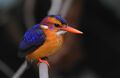 Speciation
 -
Speciation
-
Speciation
-
Speciation
-
 Speciation
 -
Speciation
-
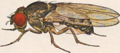 Speciation
 -
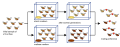 Speciation
 -
Speciation
-
 Speciation
 -
Speciation
-
 Speciation
.jpg)


Medical Disclaimer: WikiMD is for informational purposes only and is not a substitute for professional medical advice. Content may be inaccurate or outdated and should not be used for diagnosis or treatment. Always consult your healthcare provider for medical decisions. Verify information with trusted sources such as CDC.gov and NIH.gov. By using this site, you agree that WikiMD is not liable for any outcomes related to its content. See full disclaimer.
Credits:Most images are courtesy of Wikimedia commons, and templates, categories Wikipedia, licensed under CC BY SA or similar.
Translate this page: - East Asian
中文,
日本,
한국어,
South Asian
हिन्दी,
தமிழ்,
తెలుగు,
Urdu,
ಕನ್ನಡ,
Southeast Asian
Indonesian,
Vietnamese,
Thai,
မြန်မာဘာသာ,
বাংলা
European
español,
Deutsch,
français,
Greek,
português do Brasil,
polski,
română,
русский,
Nederlands,
norsk,
svenska,
suomi,
Italian
Middle Eastern & African
عربى,
Turkish,
Persian,
Hebrew,
Afrikaans,
isiZulu,
Kiswahili,
Other
Bulgarian,
Hungarian,
Czech,
Swedish,
മലയാളം,
मराठी,
ਪੰਜਾਬੀ,
ગુજરાતી,
Portuguese,
Ukrainian


_nyererei_male.jpg)

_1_by_N._A._Naseer.jpg)

