Immediately dangerous to life or health
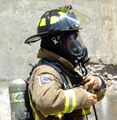
Immediately Dangerous to Life or Health (IDLH) is a term and concept used in the field of occupational health and safety to describe an environmental condition that poses an immediate or delayed threat to life, would cause irreversible adverse health effects, or would impair an individual's ability to escape from a dangerous situation. The National Institute for Occupational Safety and Health (NIOSH) is primarily responsible for establishing IDLH values for various substances and conditions.
Definition[edit]
The IDLH value is defined as the maximum level of a hazardous substance from which one could escape within 30 minutes without any escape-impairing symptoms or any irreversible health effects. This concept is crucial in the development of personal protective equipment (PPE) standards, the design of environmental monitoring in workplaces, and the establishment of emergency response procedures.
Criteria for Establishing IDLH Values[edit]
NIOSH considers several factors when determining the IDLH value for a substance or condition, including:
- Acute toxicity data from human and animal studies
- The concentration that could cause irreversible health effects
- The concentration that could impair the ability to escape
- Respiratory protection factors and limitations
Applications[edit]
IDLH values are used in various applications, including:
- Designing and selecting appropriate respiratory protection equipment
- Establishing safety protocols for handling hazardous materials
- Emergency response planning and training
- Risk assessment and management in workplaces
Examples[edit]
Some examples of IDLH values for common substances include:
- Carbon monoxide: 1200 parts per million (ppm)
- Hydrogen sulfide: 100 ppm
- Ammonia: 300 ppm
These values indicate the concentration levels above which immediate evacuation and the use of appropriate respiratory protection are necessary to prevent serious health effects or death.
Regulatory Aspects[edit]
In the United States, the Occupational Safety and Health Administration (OSHA) and NIOSH work together to regulate workplace exposure to hazardous substances. OSHA uses IDLH values to set requirements for respiratory protection programs under the Respiratory Protection Standard (29 CFR 1910.134).
Challenges and Considerations[edit]
Determining IDLH values involves uncertainties due to variations in individual susceptibility, exposure scenarios, and the quality of toxicity data. Therefore, these values are subject to revision as new information becomes available.
See Also[edit]
- Occupational Safety and Health Administration (OSHA)
- National Institute for Occupational Safety and Health (NIOSH)
- Personal Protective Equipment (PPE)
- Respiratory Protection
References[edit]

This safety related article is a stub. You can help WikiMD by expanding it.
-
 Immediately dangerous to life or health
 -
 Immediately dangerous to life or health
 -
 Immediately dangerous to life or health


Medical Disclaimer: WikiMD is for informational purposes only and is not a substitute for professional medical advice. Content may be inaccurate or outdated and should not be used for diagnosis or treatment. Always consult your healthcare provider for medical decisions. Verify information with trusted sources such as CDC.gov and NIH.gov. By using this site, you agree that WikiMD is not liable for any outcomes related to its content. See full disclaimer.
Credits:Most images are courtesy of Wikimedia commons, and templates, categories Wikipedia, licensed under CC BY SA or similar.
Translate page: - East Asian
中文,
日本,
한국어,
South Asian
हिन्दी,
தமிழ்,
తెలుగు,
Urdu,
ಕನ್ನಡ,
Southeast Asian
Indonesian,
Vietnamese,
Thai,
မြန်မာဘာသာ,
বাংলা
European
español,
Deutsch,
français,
Greek,
português do Brasil,
polski,
română,
русский,
Nederlands,
norsk,
svenska,
suomi,
Italian
Middle Eastern & African
عربى,
Turkish,
Persian,
Hebrew,
Afrikaans,
isiZulu,
Kiswahili,
Other
Bulgarian,
Hungarian,
Czech,
Swedish,
മലയാളം,
मराठी,
ਪੰਜਾਬੀ,
ગુજરાતી,
Portuguese,
Ukrainian

