Abortion law
Overview of laws related to abortion
Abortion law refers to the legal regulations and restrictions surrounding the practice of abortion. These laws vary significantly across different countries and regions, reflecting diverse cultural, religious, and political influences.
History[edit]
The history of abortion law is complex and varies widely across different societies. In ancient times, abortion was often practiced without legal restrictions. However, with the rise of organized religions and the development of legal systems, many societies began to impose restrictions on abortion.
In the 19th and early 20th centuries, many countries enacted laws that criminalized abortion, often influenced by religious and moral considerations. The mid-20th century saw a shift towards liberalization in some parts of the world, with countries like the United States and several European nations beginning to allow abortion under certain circumstances.
Current Legal Frameworks[edit]
Abortion laws today can be broadly categorized into four main types:
- Prohibited altogether: In some countries, abortion is completely banned with no exceptions.
- Permitted to save the woman's life: Some jurisdictions allow abortion only when it is necessary to save the life of the pregnant woman.
- Permitted for health reasons: In these areas, abortion is allowed to protect the physical or mental health of the woman.
- Permitted on request: Some countries allow abortion on request, often with gestational limits.
Regional Variations[edit]
Africa[edit]
Abortion laws in Africa are generally restrictive, with many countries allowing abortion only to save the woman's life. However, there are exceptions, such as South Africa, which permits abortion on request up to a certain gestational age.
Asia[edit]
In Asia, abortion laws vary widely. Countries like Japan and India have relatively liberal abortion laws, while others, such as Philippines, have very restrictive laws.
Europe[edit]
European countries generally have more liberal abortion laws, with many allowing abortion on request. However, there are exceptions, such as Poland, where abortion laws are highly restrictive.
North America[edit]
In North America, the United States has a complex legal landscape due to the Roe v. Wade decision, which was overturned in 2022, leading to significant variations in abortion laws across states. Canada allows abortion on request with no legal restrictions.
South America[edit]
South American countries generally have restrictive abortion laws, but there have been recent movements towards liberalization, such as in Argentina, which legalized abortion in 2020.
Controversies and Debates[edit]
Abortion law is a highly contentious issue, with debates often centered around moral, ethical, and religious considerations. Proponents of liberal abortion laws argue for women's rights and bodily autonomy, while opponents often cite the rights of the unborn and moral objections.
Related pages[edit]
Gallery[edit]
-
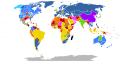 Map of abortion laws by country.
 -
 Vigil in Paraná for the vote on the Voluntary Interruption of Pregnancy Law.


-
Map of abortion laws by country
-
Vigil for the vote on the Voluntary Interruption of Pregnancy Law in Paraná
Ad. Transform your health with W8MD Weight Loss, Sleep & MedSpa

Tired of being overweight?
Special offer:
Budget GLP-1 weight loss medications
- Semaglutide starting from $29.99/week and up with insurance for visit of $59.99 and up per week self pay.
- Tirzepatide starting from $45.00/week and up (dose dependent) or $69.99/week and up self pay
✔ Same-week appointments, evenings & weekends
Learn more:
- GLP-1 weight loss clinic NYC
- W8MD's NYC medical weight loss
- W8MD Philadelphia GLP-1 shots
- Philadelphia GLP-1 injections
- Affordable GLP-1 shots NYC
|
WikiMD Medical Encyclopedia |
Medical Disclaimer: WikiMD is for informational purposes only and is not a substitute for professional medical advice. Content may be inaccurate or outdated and should not be used for diagnosis or treatment. Always consult your healthcare provider for medical decisions. Verify information with trusted sources such as CDC.gov and NIH.gov. By using this site, you agree that WikiMD is not liable for any outcomes related to its content. See full disclaimer.
Credits:Most images are courtesy of Wikimedia commons, and templates, categories Wikipedia, licensed under CC BY SA or similar.
Translate this page: - East Asian
中文,
日本,
한국어,
South Asian
हिन्दी,
தமிழ்,
తెలుగు,
Urdu,
ಕನ್ನಡ,
Southeast Asian
Indonesian,
Vietnamese,
Thai,
မြန်မာဘာသာ,
বাংলা
European
español,
Deutsch,
français,
Greek,
português do Brasil,
polski,
română,
русский,
Nederlands,
norsk,
svenska,
suomi,
Italian
Middle Eastern & African
عربى,
Turkish,
Persian,
Hebrew,
Afrikaans,
isiZulu,
Kiswahili,
Other
Bulgarian,
Hungarian,
Czech,
Swedish,
മലയാളം,
मराठी,
ਪੰਜਾਬੀ,
ગુજરાતી,
Portuguese,
Ukrainian
