Ignaz von Döllinger
Ignaz von Döllinger (28 February 1799 – 10 January 1890), also known as Johann Joseph Ignaz von Döllinger, was a renowned German Catholic theologian, church historian, and one of the most prominent figures in the Old Catholic Church movement following his excommunication from the Roman Catholic Church. His extensive work and reformist ideas significantly influenced the landscape of 19th-century theology and the broader Christian ecclesiastical world.
Early Life and Education[edit]
Ignaz von Döllinger was born in Bamberg, Bavaria, into a family with a strong academic and medical background. His father was a professor of medicine at the University of Bamberg. Döllinger pursued his early education in his hometown before moving to the University of Würzburg and subsequently to the University of Munich, where he delved deeply into theology, history, and philosophy. His academic prowess was evident early on, and he was ordained a priest in 1822.
Career[edit]
Döllinger's career was marked by his tenure as a professor of church history and ecclesiastical law at the University of Munich, a position he held from 1826 until his death. He was a prolific writer, contributing significantly to the understanding of the early Christian church, the development of dogma, and the history of the papacy. His scholarly works, including his critique of the First Vatican Council and its declaration of Papal Infallibility, positioned him as a leading intellectual voice within the church.
First Vatican Council and Excommunication[edit]
The First Vatican Council (1869-1870) was a pivotal moment in Döllinger's life. He openly opposed the doctrine of Papal Infallibility, arguing that it was not supported by historical evidence and was contrary to the tradition of collective ecclesiastical authority. Following the council's declaration, Döllinger refused to accept the doctrine, leading to his excommunication in 1871.
Old Catholic Church Movement[edit]
After his excommunication, Döllinger became a central figure in the Old Catholic Church movement, which rejected the First Vatican Council's declarations. Although he never formally joined the Old Catholic Church, his ideas and support significantly shaped its development. He advocated for a church that adhered more closely to the early Christian traditions and ecclesiastical structures, emphasizing the importance of historical continuity and collective authority.
Legacy[edit]
Ignaz von Döllinger's legacy is multifaceted. He is remembered as a pioneering church historian whose work laid the foundation for modern historical-critical methods in theology. His stance against Papal Infallibility and his subsequent excommunication highlighted the tensions within the Catholic Church regarding authority and tradition. Döllinger's influence extended beyond his lifetime, impacting theological thought, church reform movements, and the establishment of the Old Catholic Church.
Selected Works[edit]
- The Pope and the Council (1869) – A critical examination of the First Vatican Council and the doctrine of Papal Infallibility.
- History of the Church – A comprehensive multi-volume work detailing the history of the Christian church from its inception to the modern era.
See Also[edit]

-
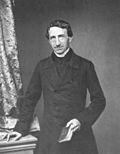 Ignaz von Döllinger
 -
 Portrait of Ignaz von Döllinger by Franz von Lenbach (1878)
 -
 Ignaz von Döllinger by Franz von Lenbach
 -
 Ignaz von Döllinger with Lord Acton at Tegernsee

.jpg)


Ad. Transform your life with W8MD's
GLP-1 weight loss injections special from $29.99 with insurance
|
WikiMD Medical Encyclopedia |
Medical Disclaimer: WikiMD is for informational purposes only and is not a substitute for professional medical advice. Content may be inaccurate or outdated and should not be used for diagnosis or treatment. Always consult your healthcare provider for medical decisions. Verify information with trusted sources such as CDC.gov and NIH.gov. By using this site, you agree that WikiMD is not liable for any outcomes related to its content. See full disclaimer.
Credits:Most images are courtesy of Wikimedia commons, and templates, categories Wikipedia, licensed under CC BY SA or similar.
Translate this page: - East Asian
中文,
日本,
한국어,
South Asian
हिन्दी,
தமிழ்,
తెలుగు,
Urdu,
ಕನ್ನಡ,
Southeast Asian
Indonesian,
Vietnamese,
Thai,
မြန်မာဘာသာ,
বাংলা
European
español,
Deutsch,
français,
Greek,
português do Brasil,
polski,
română,
русский,
Nederlands,
norsk,
svenska,
suomi,
Italian
Middle Eastern & African
عربى,
Turkish,
Persian,
Hebrew,
Afrikaans,
isiZulu,
Kiswahili,
Other
Bulgarian,
Hungarian,
Czech,
Swedish,
മലയാളം,
मराठी,
ਪੰਜਾਬੀ,
ગુજરાતી,
Portuguese,
Ukrainian
