Ignaz Semmelweis
Ignaz Semmelweis
Ignaz Semmelweis
| Birth date | 1 July 1818 |
|---|---|
| Died | 13 August 1865 |
| Nationality | Hungarian |
| Known for | Pioneer of antiseptic procedures |
Ignaz Semmelweis (1818 - 1865) was a notable Hungarian physician and scientist, now widely recognized as an early pioneer of antiseptic procedures and a significant figure in the history of medical hygiene. His innovative ideas laid the groundwork for the future understanding of bacterial diseases and infections, and he is often referred to as the father of infection control.
Early Life and Career[edit]
Semmelweis was born on 1 July 1818 in Buda, now part of Budapest, Hungary. He studied medicine in Vienna and took up a position at the Vienna General Hospital, where he began his groundbreaking work.
Key Discoveries and Contributions[edit]
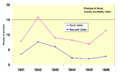
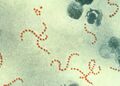
While working in the maternity clinic at the Vienna General Hospital, Semmelweis observed a high mortality rate due to puerperal fever, a condition now known to be caused by streptococcal infection. He noticed that the incidence of puerperal fever was much higher in deliveries attended by doctors and medical students compared to those attended by midwives.
Semmelweis hypothesized that the doctors and medical students, who often went directly from autopsies to the maternity ward, were carrying 'cadaverous particles' that were causing the disease. He introduced a policy requiring all medical staff to wash their hands with chlorinated lime solution before examining patients. This simple hygiene practice resulted in a significant reduction in the incidence of puerperal fever.
Despite the success of his hand hygiene policy, Semmelweis's ideas were met with resistance and mockery from his peers, partly because the existence of bacteria was not yet widely accepted and the germ theory of disease had not been established. His theories were only validated several years after his death, with the work of scientists like Louis Pasteur and Robert Koch, who provided evidence for the germ theory of disease.
Later Life and Death[edit]
In his later years, Semmelweis's mental health deteriorated, possibly due to Alzheimer's disease. He was committed to an asylum in 1865, where he died 14 days later under mysterious circumstances, possibly as a result of being beaten.
Legacy[edit]
Today, Semmelweis is celebrated for his pioneering work in infection control. His insistence on hand hygiene is considered a foundational principle of modern medical practice and has saved countless lives. His story also serves as a reminder of the importance of scientific humility and open-mindedness.
See Also[edit]
Louis Pasteur Robert Koch Germ theory of disease

This WikiMD article can only be edited by registered and verified editors. You can log in or register.
-
 Ignaz Semmelweis
 -
 Ignaz Semmelweis
 -
 Ignaz Semmelweis
 -
 Ignaz Semmelweis
 -
 Ignaz Semmelweis
 -
 Ignaz Semmelweis
 -
 Ignaz Semmelweis
 -
 Ignaz Semmelweis
 -
 Ignaz Semmelweis
 -
 Ignaz Semmelweis
 -
 Ignaz Semmelweis
 -
 Ignaz Semmelweis


Medical Disclaimer: WikiMD is for informational purposes only and is not a substitute for professional medical advice. Content may be inaccurate or outdated and should not be used for diagnosis or treatment. Always consult your healthcare provider for medical decisions. Verify information with trusted sources such as CDC.gov and NIH.gov. By using this site, you agree that WikiMD is not liable for any outcomes related to its content. See full disclaimer.
Credits:Most images are courtesy of Wikimedia commons, and templates, categories Wikipedia, licensed under CC BY SA or similar.
Translate page: - East Asian
中文,
日本,
한국어,
South Asian
हिन्दी,
தமிழ்,
తెలుగు,
Urdu,
ಕನ್ನಡ,
Southeast Asian
Indonesian,
Vietnamese,
Thai,
မြန်မာဘာသာ,
বাংলা
European
español,
Deutsch,
français,
Greek,
português do Brasil,
polski,
română,
русский,
Nederlands,
norsk,
svenska,
suomi,
Italian
Middle Eastern & African
عربى,
Turkish,
Persian,
Hebrew,
Afrikaans,
isiZulu,
Kiswahili,
Other
Bulgarian,
Hungarian,
Czech,
Swedish,
മലയാളം,
मराठी,
ਪੰਜਾਬੀ,
ગુજરાતી,
Portuguese,
Ukrainian


