Farsightedness

Editor-In-Chief: Prab R Tumpati, MD
Obesity, Sleep & Internal medicine
Founder, WikiMD Wellnesspedia &
W8MD's weight loss doctor NYC
Philadelphia GLP-1 weight loss and GLP-1 clinic NYC
| Farsightedness | |
|---|---|

| |
| Synonyms | Hyperopia, hypermetropia |
| Pronounce | N/A |
| Specialty | N/A |
| Symptoms | Blurry vision, eye strain, headaches |
| Complications | Amblyopia, strabismus |
| Onset | Often noticed in childhood |
| Duration | Lifelong |
| Types | N/A |
| Causes | Genetics, eye anatomy |
| Risks | Family history, age |
| Diagnosis | Eye examination |
| Differential diagnosis | Myopia, astigmatism, presbyopia |
| Prevention | None |
| Treatment | Eyeglasses, contact lenses, refractive surgery |
| Medication | N/A |
| Prognosis | N/A |
| Frequency | Common |
| Deaths | N/A |
Farsightedness, also known as hyperopia, is a common type of refractive error where distant objects may be seen more clearly than objects that are near. However, people experience farsightedness differently. Some people may not notice any problems with their vision, especially when they are young. For people with significant farsightedness, vision can be blurry for objects at any distance, near or far.
Causes[edit]
Farsightedness is the result of the visual image being focused behind the retina rather than directly on it. It occurs when the eyeball is too short, which prevents incoming light from focusing directly on the retina. It can also be caused by an irregular shape of the cornea or lens.
Symptoms[edit]
Symptoms of farsightedness may include difficulty concentrating and maintaining a clear focus on near objects, eye strain, fatigue and/or headaches after close work, aching or burning eyes, irritability or nervousness after sustained concentration.
Diagnosis[edit]
A comprehensive eye examination by an optometrist or ophthalmologist can diagnose farsightedness. The exam will include tests to assess vision and the ability to focus and coordinate the eyes. The doctor will also check the overall health of the eyes.
Treatment[edit]
Farsightedness can be corrected with glasses or contact lenses to change the way light rays bend into the eyes. You may need to wear your glasses or contacts all the time or only when you need very clear, detailed vision. If you are mildly farsighted, your eyes may be able to compensate without the need for corrective lenses. In severe cases, laser surgery can be an option.
Prevention[edit]
There is no way to prevent farsightedness. However, regular eye exams can help detect farsightedness early.
Images[edit]
-
Cross-sectional view of the human eye
-
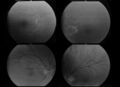 Choroid folds


Sponsored Health Resource

W8MD Weight Loss, Sleep & MedSpa
Looking for physician-supervised weight loss, semaglutide, tirzepatide, or GLP-1 receptor agonist options? W8MD helps eligible patients in New York City, Brooklyn, New Jersey, Connecticut, Pennsylvania, Delaware, and greater Philadelphia with medical weight loss, sleep medicine, and long-term maintenance support.
GLP-1 specials: Affordable GLP-1 injections NYC and Philadelphia starting from $29.99/week and up for semaglutide with insurance accepted for qualifying visits, and $45/week and up for tirzepatide with insurance accepted for qualifying visits. Self-pay options start from $59.99/week and up for semaglutide and $69.99/week and up for tirzepatide.
Medical weight loss NYC | Affordable GLP-1 injections NYC | Budget GLP-1 weight loss shots Philadelphia | New Jersey medical weight loss | NYC medical weight loss | Philadelphia medical weight loss | Sleep clinic NYC | W8MD's Philadelphia GLP-1 doctor | Weight loss prescriptions NYC
Book a W8MD appointment · View GLP-1 specials
Paid promotional message. Eligibility, pricing, insurance coverage, medication availability, and results vary. Medical evaluation required.

Medical Disclaimer: WikiMD is for informational purposes only and is not a substitute for professional medical advice. Content may be inaccurate or outdated and should not be used for diagnosis or treatment. Always consult your healthcare provider for medical decisions. Verify information with trusted sources such as CDC.gov and NIH.gov. By using this site, you agree that WikiMD is not liable for any outcomes related to its content. See full disclaimer.
Credits:Most images are courtesy of Wikimedia commons, and templates, categories Wikipedia, licensed under CC BY SA or similar.
Translate page: - East Asian
中文,
日本,
한국어,
South Asian
हिन्दी,
தமிழ்,
తెలుగు,
Urdu,
ಕನ್ನಡ,
Southeast Asian
Indonesian,
Vietnamese,
Thai,
မြန်မာဘာသာ,
বাংলা
European
español,
Deutsch,
français,
Greek,
português do Brasil,
polski,
română,
русский,
Nederlands,
norsk,
svenska,
suomi,
Italian
Middle Eastern & African
عربى,
Turkish,
Persian,
Hebrew,
Afrikaans,
isiZulu,
Kiswahili,
Other
Bulgarian,
Hungarian,
Czech,
Swedish,
മലയാളം,
मराठी,
ਪੰਜਾਬੀ,
ગુજરાતી,
Portuguese,
Ukrainian


