Human population planning
Human population planning is the practice of intentionally managing the rate of growth of a human population. Historically, human population planning has been implemented with the goal of increasing the rate of human population growth. However, in the late 20th and early 21st centuries, focus has shifted to reducing the rate of population growth, due to concerns about overpopulation, environmental degradation, and quality of life.
Overview[edit]
Human population planning is often implemented through policies aimed at controlling the growth of the human population by influencing the rate of births through access to contraception, family planning services, and health care. It can also involve policies that aim to reduce infant mortality rates and increase the age of first pregnancy. Governments and organizations may also promote education and employment opportunities for women as a strategy for population planning, as higher levels of education and employment have been linked to lower birth rates.
History[edit]
The concept of human population planning has been around for centuries, but it gained significant attention in the 20th century. One of the earliest proponents of population planning was Thomas Malthus, who in the late 18th century argued that population growth would eventually outpace food production, leading to widespread poverty and famine. In the 20th century, concerns about overpopulation led to the establishment of organizations like the Population Council and initiatives such as the One-Child Policy in China.
Methods[edit]
Human population planning can involve a variety of methods, including:
- Contraception and Family Planning: Providing access to contraceptives and family planning services allows individuals to control the number and spacing of their children.
- Education: Educating individuals, especially women, about reproductive health and family planning can lead to lower birth rates.
- Economic Incentives: Some governments offer financial incentives or disincentives to influence the number of children families have.
- Legal Measures: Laws and policies can be enacted to encourage or discourage population growth, such as marriage laws and child benefit policies.
Ethical and Social Considerations[edit]
Human population planning raises a number of ethical and social considerations. These include concerns about reproductive rights, the potential for coercion, and the impact of population control measures on vulnerable groups. It is important that population planning policies respect individual rights and are implemented in a way that is equitable and just.
Current Challenges and Future Directions[edit]
As the global population continues to grow, reaching over 7.8 billion people in 2021, the challenges of human population planning become increasingly complex. Issues such as climate change, resource depletion, and geopolitical tensions are intertwined with population dynamics. Future efforts in population planning will need to address these challenges in a holistic and sustainable manner, ensuring that population growth does not compromise the ability of future generations to meet their needs.
 | This sociology-related article is a stub. You can help WikiMD by expanding the page. |
-
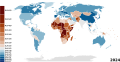 Total Fertility Rate Map by Country
 -
 World Population Growth Rate 1950–2050


Medical Disclaimer: WikiMD is for informational purposes only and is not a substitute for professional medical advice. Content may be inaccurate or outdated and should not be used for diagnosis or treatment. Always consult your healthcare provider for medical decisions. Verify information with trusted sources such as CDC.gov and NIH.gov. By using this site, you agree that WikiMD is not liable for any outcomes related to its content. See full disclaimer.
Credits:Most images are courtesy of Wikimedia commons, and templates, categories Wikipedia, licensed under CC BY SA or similar.
Translate page: - East Asian
中文,
日本,
한국어,
South Asian
हिन्दी,
தமிழ்,
తెలుగు,
Urdu,
ಕನ್ನಡ,
Southeast Asian
Indonesian,
Vietnamese,
Thai,
မြန်မာဘာသာ,
বাংলা
European
español,
Deutsch,
français,
Greek,
português do Brasil,
polski,
română,
русский,
Nederlands,
norsk,
svenska,
suomi,
Italian
Middle Eastern & African
عربى,
Turkish,
Persian,
Hebrew,
Afrikaans,
isiZulu,
Kiswahili,
Other
Bulgarian,
Hungarian,
Czech,
Swedish,
മലയാളം,
मराठी,
ਪੰਜਾਬੀ,
ગુજરાતી,
Portuguese,
Ukrainian

