Homochirality
Homochirality refers to the phenomenon where molecules of a certain type, such as amino acids and sugars, which can exist in mirror-image forms (known as enantiomers), are found in nature in predominantly one enantiomeric form. This characteristic is crucial for the structure and function of biological molecules, playing a significant role in the biochemistry of life on Earth.
Overview[edit]
In chemistry, chirality is a property of a molecule that has a non-superimposable mirror image. The two forms are called enantiomers. A mixture of equal amounts of both enantiomers is called a racemic mixture. However, in biological systems, we often encounter homochirality, where only one enantiomer is present or predominates. For example, almost all amino acids in proteins are left-handed (L-form), while sugars in RNA and DNA are right-handed (D-form).
Origin of Homochirality[edit]
The origin of homochirality in nature is a subject of much scientific research and debate. Several hypotheses have been proposed to explain how homochirality emerged, including autocatalytic reactions, chiral symmetry breaking under the influence of polarized light, and the action of chiral catalysts. The consensus is that once a small enantiomeric excess was established, autocatalytic processes amplified this imbalance, leading to the homochirality observed in biological molecules today.
Importance in Biology[edit]
Homochirality is essential for the structure and function of biological macromolecules. The uniformity in the chirality of amino acids allows proteins to fold into specific three-dimensional structures necessary for their biological function. Similarly, the homochirality of sugars ensures the correct assembly of nucleic acids, allowing for the storage and transmission of genetic information.
Implications for the Origin of Life[edit]
The presence of homochirality is considered a key indicator of life and has implications for the study of the origin of life on Earth and the search for life elsewhere in the universe. It is thought that understanding the mechanisms that led to homochirality on Earth could provide insights into the conditions necessary for the emergence of life.
Search for Extraterrestrial Homochirality[edit]
Astrobiology research often focuses on detecting homochirality in molecules found in space, such as in meteorites or cometary material, as evidence of life or prebiotic chemistry. Missions designed to search for signs of life on Mars and other celestial bodies also consider homochirality as a potential biosignature.
Conclusion[edit]
Homochirality is a fundamental aspect of the molecular makeup of life on Earth, with significant implications for biology, chemistry, and the search for extraterrestrial life. Understanding how homochirality arose and its role in the origin of life remains a fascinating area of scientific inquiry.

 | This astrobiology-related article is a stub. You can help WikiMD by expanding the page. |
-
 Phase portrait of Frank's model
 -
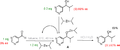 Soai autocatalysis reaction
 -
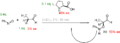 Homochiral proline structure


Medical Disclaimer: WikiMD is for informational purposes only and is not a substitute for professional medical advice. Content may be inaccurate or outdated and should not be used for diagnosis or treatment. Always consult your healthcare provider for medical decisions. Verify information with trusted sources such as CDC.gov and NIH.gov. By using this site, you agree that WikiMD is not liable for any outcomes related to its content. See full disclaimer.
Credits:Most images are courtesy of Wikimedia commons, and templates, categories Wikipedia, licensed under CC BY SA or similar.
Translate page: - East Asian
中文,
日本,
한국어,
South Asian
हिन्दी,
தமிழ்,
తెలుగు,
Urdu,
ಕನ್ನಡ,
Southeast Asian
Indonesian,
Vietnamese,
Thai,
မြန်မာဘာသာ,
বাংলা
European
español,
Deutsch,
français,
Greek,
português do Brasil,
polski,
română,
русский,
Nederlands,
norsk,
svenska,
suomi,
Italian
Middle Eastern & African
عربى,
Turkish,
Persian,
Hebrew,
Afrikaans,
isiZulu,
Kiswahili,
Other
Bulgarian,
Hungarian,
Czech,
Swedish,
മലയാളം,
मराठी,
ਪੰਜਾਬੀ,
ગુજરાતી,
Portuguese,
Ukrainian

