Hepatoportoenterostomy
Hepatoportoenterostomy is a surgical procedure often used to treat biliary atresia, a condition in infants where the bile ducts outside and inside the liver are scarred and blocked. This procedure is also known as the Kasai procedure, named after the Japanese surgeon Morio Kasai who developed it.
Overview[edit]
The bile ducts are tubes that carry bile from the liver to the gallbladder and small intestine. In biliary atresia, these ducts are blocked, causing bile to remain in the liver. Over time, this can lead to liver damage and cirrhosis. The Kasai procedure aims to restore bile flow from the liver into the intestine by creating a new pathway for bile drainage.
Procedure[edit]
During a hepatoportoenterostomy, the surgeon removes the damaged bile ducts and replaces them with a loop of the small intestine. This loop is connected to the liver at the spot where bile is expected to drain. The other end is connected to the intestine, allowing bile to bypass the damaged ducts and flow directly from the liver to the intestine.
Risks and Complications[edit]
Like any surgical procedure, hepatoportoenterostomy carries some risks. These may include infection, bleeding, and complications from anesthesia. Additionally, the procedure may not always be successful in restoring bile flow, and further treatment or liver transplantation may be necessary.
Aftercare and Prognosis[edit]
After the procedure, infants are typically monitored closely to ensure that bile is draining properly. Medications may be given to promote bile flow and reduce the risk of infection. The long-term prognosis varies, but many children who undergo the procedure are able to live normal, healthy lives.
See Also[edit]

This WikiMD article can only be edited by registered and verified editors. You can log in or register.
-
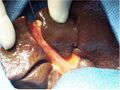 Hepatoportoenterostomy


Medical Disclaimer: WikiMD is for informational purposes only and is not a substitute for professional medical advice. Content may be inaccurate or outdated and should not be used for diagnosis or treatment. Always consult your healthcare provider for medical decisions. Verify information with trusted sources such as CDC.gov and NIH.gov. By using this site, you agree that WikiMD is not liable for any outcomes related to its content. See full disclaimer.
Credits:Most images are courtesy of Wikimedia commons, and templates, categories Wikipedia, licensed under CC BY SA or similar.
Translate page: - East Asian
中文,
日本,
한국어,
South Asian
हिन्दी,
தமிழ்,
తెలుగు,
Urdu,
ಕನ್ನಡ,
Southeast Asian
Indonesian,
Vietnamese,
Thai,
မြန်မာဘာသာ,
বাংলা
European
español,
Deutsch,
français,
Greek,
português do Brasil,
polski,
română,
русский,
Nederlands,
norsk,
svenska,
suomi,
Italian
Middle Eastern & African
عربى,
Turkish,
Persian,
Hebrew,
Afrikaans,
isiZulu,
Kiswahili,
Other
Bulgarian,
Hungarian,
Czech,
Swedish,
മലയാളം,
मराठी,
ਪੰਜਾਬੀ,
ગુજરાતી,
Portuguese,
Ukrainian

