Hepatitis C virus
Hepatitis C virus (HCV) is a small, enveloped, positive-sense single-stranded RNA virus of the family Flaviviridae. HCV is a major cause of both acute and chronic hepatitis.
Overview[edit]
Hepatitis C virus is a bloodborne virus and the most common modes of infection are through exposure to small quantities of blood. This may happen through injection drug use, unsafe injection practices, unsafe health care, and the transfusion of unscreened blood and blood products.
Structure[edit]
The Hepatitis C virus is a small (55–65 nm in size), enveloped, positive-sense single-strand RNA virus of the family Flaviviridae. The virus particle consists of a core of genetic material (RNA), surrounded by an icosahedral protective shell of protein, and further encased in a lipid (fatty) envelope of cellular origin.
Transmission[edit]
Hepatitis C is a bloodborne virus. The most common modes of infection are through exposure to small quantities of blood. This may happen through injection drug use, unsafe injection practices, unsafe health care, and the transfusion of unscreened blood and blood products.
Symptoms[edit]
Most people infected with the Hepatitis C virus do not have symptoms. Some people, however, can have mild to severe symptoms soon after being infected, including fever, fatigue, loss of appetite, nausea, vomiting, abdominal pain, dark urine, clay-colored bowel movements, joint pain, and jaundice.
Treatment[edit]
Antiviral medicines can cure more than 95% of persons with Hepatitis C infection, thereby reducing the risk of death from liver cancer and cirrhosis, but access to diagnosis and treatment is low.
See also[edit]

This WikiMD article can only be edited by registered and verified editors. You can log in or register.
Hepatitis C virus[edit]
-
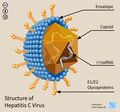 Hepatitis C virus structure
 -
Hepatitis C virus IRES
-
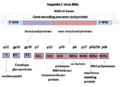 Hepatitis C virus genome
 -
Hepatitis C virus
-
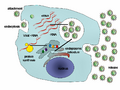 Hepatitis C virus replication


Medical Disclaimer: WikiMD is for informational purposes only and is not a substitute for professional medical advice. Content may be inaccurate or outdated and should not be used for diagnosis or treatment. Always consult your healthcare provider for medical decisions. Verify information with trusted sources such as CDC.gov and NIH.gov. By using this site, you agree that WikiMD is not liable for any outcomes related to its content. See full disclaimer.
Credits:Most images are courtesy of Wikimedia commons, and templates, categories Wikipedia, licensed under CC BY SA or similar.
Translate page: - East Asian
中文,
日本,
한국어,
South Asian
हिन्दी,
தமிழ்,
తెలుగు,
Urdu,
ಕನ್ನಡ,
Southeast Asian
Indonesian,
Vietnamese,
Thai,
မြန်မာဘာသာ,
বাংলা
European
español,
Deutsch,
français,
Greek,
português do Brasil,
polski,
română,
русский,
Nederlands,
norsk,
svenska,
suomi,
Italian
Middle Eastern & African
عربى,
Turkish,
Persian,
Hebrew,
Afrikaans,
isiZulu,
Kiswahili,
Other
Bulgarian,
Hungarian,
Czech,
Swedish,
മലയാളം,
मराठी,
ਪੰਜਾਬੀ,
ગુજરાતી,
Portuguese,
Ukrainian


