Hemoglobin M disease

Editor-In-Chief: Prab R Tumpati, MD
Obesity, Sleep & Internal medicine
Founder, WikiMD Wellnesspedia &
W8MD's weight loss doctor NYC
Philadelphia GLP-1 weight loss and GLP-1 clinic NYC
| Hemoglobin M disease | |
|---|---|
 | |
| Synonyms | N/A |
| Pronounce | N/A |
| Specialty | N/A |
| Symptoms | Cyanosis, hypoxia |
| Complications | Methemoglobinemia |
| Onset | Congenital |
| Duration | Lifelong |
| Types | N/A |
| Causes | Genetic mutation in hemoglobin |
| Risks | Family history of the condition |
| Diagnosis | Blood test, genetic testing |
| Differential diagnosis | Methemoglobinemia, other hemoglobinopathies |
| Prevention | N/A |
| Treatment | Ascorbic acid, methylene blue |
| Medication | Ascorbic acid, methylene blue |
| Prognosis | N/A |
| Frequency | Rare |
| Deaths | N/A |
Hemoglobin M disease is a rare hemoglobinopathy characterized by the presence of abnormal hemoglobin molecules, specifically hemoglobin M (HbM), in the blood. This condition is a type of methemoglobinemia, where an increased level of methemoglobin, a form of hemoglobin that is unable to bind oxygen effectively, is present in the blood, leading to oxygen deprivation in tissues.
Causes[edit]
Hemoglobin M disease is caused by genetic mutations in the genes that encode the alpha-globin or beta-globin chains of hemoglobin. These mutations lead to the substitution of amino acids in the globin chains, resulting in the formation of hemoglobin M, which has a higher affinity for ferric iron (Fe3+) than the ferrous iron (Fe2+) normally found in hemoglobin. This alteration impairs the oxygen-carrying capacity of the hemoglobin molecules.
Types[edit]
There are several types of Hemoglobin M disease, classified based on the specific globin chain affected by the mutation:
- Hemoglobin M Boston affects the alpha-globin chain.
- Hemoglobin M Iwate affects the alpha-globin chain.
- Hemoglobin M Hyde Park affects the beta-globin chain.
- Hemoglobin M Saskatoon affects the beta-globin chain.
- Hemoglobin M Milwaukee affects the beta-globin chain.
Symptoms[edit]
The primary symptom of Hemoglobin M disease is cyanosis, a bluish discoloration of the skin and mucous membranes, due to the reduced oxygen-carrying capacity of the blood. Unlike other forms of methemoglobinemia, Hemoglobin M disease does not respond to treatment with methylene blue, a common therapy for reducing methemoglobin levels.
Diagnosis[edit]
Diagnosis of Hemoglobin M disease involves a combination of clinical evaluation, family history, and specialized blood tests. Electrophoresis and spectrophotometry can be used to identify the presence of abnormal hemoglobin variants, including Hemoglobin M.
Treatment[edit]
There is no specific treatment for Hemoglobin M disease. Management focuses on alleviating symptoms and avoiding factors that can exacerbate oxygen deprivation. Patients are advised to avoid certain drugs and chemicals that can increase methemoglobin levels.
Prognosis[edit]
The prognosis for individuals with Hemoglobin M disease varies. Many affected individuals live normal lifespans with minimal symptoms, while others may experience significant oxygen deprivation and related complications.
Gallery[edit]
-
Lifelong cyanosis and skin color
-
Cyanotic extremities and cyanotic lip discoloration
-
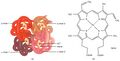 1904 Hemoglobin
 -
Lifelong cyanosis and skin color

 | This medical article is a stub. You can help WikiMD by expanding the page. |

Medical Disclaimer: WikiMD is for informational purposes only and is not a substitute for professional medical advice. Content may be inaccurate or outdated and should not be used for diagnosis or treatment. Always consult your healthcare provider for medical decisions. Verify information with trusted sources such as CDC.gov and NIH.gov. By using this site, you agree that WikiMD is not liable for any outcomes related to its content. See full disclaimer.
Credits:Most images are courtesy of Wikimedia commons, and templates, categories Wikipedia, licensed under CC BY SA or similar.
Translate page: - East Asian
中文,
日本,
한국어,
South Asian
हिन्दी,
தமிழ்,
తెలుగు,
Urdu,
ಕನ್ನಡ,
Southeast Asian
Indonesian,
Vietnamese,
Thai,
မြန်မာဘာသာ,
বাংলা
European
español,
Deutsch,
français,
Greek,
português do Brasil,
polski,
română,
русский,
Nederlands,
norsk,
svenska,
suomi,
Italian
Middle Eastern & African
عربى,
Turkish,
Persian,
Hebrew,
Afrikaans,
isiZulu,
Kiswahili,
Other
Bulgarian,
Hungarian,
Czech,
Swedish,
മലയാളം,
मराठी,
ਪੰਜਾਬੀ,
ગુજરાતી,
Portuguese,
Ukrainian


.jpg)

.jpg)