Hectocotylus
Hectocotylus refers to a specialized arm or tentacle found in male cephalopods, particularly within the orders of octopuses, squids, and cuttlefish. This structure is utilized during the mating process to transfer spermatophores (sperm packets) from the male to the female, facilitating fertilization. The hectocotylus is characterized by its modification; it may have a reduced number of suckers, be elongated, or have other structural adaptations that distinguish it from the other arms or tentacles of the cephalopod.
Structure and Function[edit]
The hectocotylus varies significantly in structure among different cephalopod species. In many cases, it is morphologically distinct from the other arms, equipped with specialized modifications that aid in the secure transfer of spermatophores to the female. For example, in some species of octopus, the hectocotylus is capable of detaching from the male and remaining inside the female's mantle cavity to ensure sperm transfer.
The process of transferring spermatophores can be complex and is often species-specific. The male cephalopod typically loads the spermatophores into the hectocotylus, then inserts the arm into the female's mantle cavity or a specialized receptacle to deposit the spermatophores.
Evolutionary Significance[edit]
The evolution of the hectocotylus is a fascinating aspect of cephalopod biology, highlighting the diverse reproductive strategies within this group. This adaptation allows for direct sperm transfer in an aquatic environment, which can increase the chances of successful fertilization. The specific modifications of the hectocotylus in different species reflect a range of evolutionary solutions to the challenges of mating in the marine environment.
Research and Study[edit]
The study of the hectocotylus provides insights into the reproductive biology, behavior, and evolution of cephalopods. Researchers examine the structure and function of the hectocotylus to understand mating behaviors, reproductive success, and the evolutionary pressures that have shaped these unique adaptations.
Conservation and Importance[edit]
Understanding the reproductive mechanisms of cephalopods, including the role of the hectocotylus, is crucial for the conservation and management of these species. Many cephalopods are of commercial importance and are subject to fishing pressures. Knowledge of their reproductive biology can inform sustainable management practices and conservation efforts.

-
 Hectocotyle1
 -
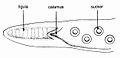
 Hectocotylized arm of a squid
 -
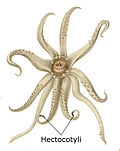
 Hectocotylized arm of an octopod
 -
 Abraliopsis morisi hectocotylus
 -
 Argonauta bottgeri hectocotylus
 -
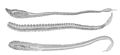 Hectocotyle1-2
 -
 Bathypolypus arcticus hectocotylus
 -
 Graneledone verrucosa hectocotylus
 -
 Haliphron atlanticus hectocotylus
 -
 Ocythoe tuberculata hectocotylus


Ad. Transform your life with W8MD's
GLP-1 weight loss injections special from $29.99


W8MD Medical Weight Loss, Sleep and Medspa offers physician-supervised medical weight loss programs: NYC medical weight loss Philadelphia medical weight loss
Affordable GLP-1 Weight Loss ShotsAffordable GLP-1 Weight Loss Shots
Budget GLP-1 injections NYC (insurance & self-pay options) Popular treatments:
- Semaglutide starting from $29.99/week
- Tirzepatide starting from $45.00/week
✔ Most insurances accepted for visits ✔ Prior authorization support when eligible
Start your physician weight loss NYC journey today:
📍 NYC: Brooklyn weight loss center 📍 Philadelphia: Philadelphia weight loss center
📞 Call: 718-946-5500 (NYC) | 215-676-2334 (Philadelphia)
Tags: Affordable GLP1 weight loss NYC, Wegovy NYC, Zepbound NYC, Philadelphia medical weight loss


|
WikiMD Medical Encyclopedia |
Medical Disclaimer: WikiMD is not a substitute for professional medical advice. The information on WikiMD is provided as an information resource only, may be incorrect, outdated or misleading, and is not to be used or relied on for any diagnostic or treatment purposes. Please consult your health care provider before making any healthcare decisions or for guidance about a specific medical condition. WikiMD expressly disclaims responsibility, and shall have no liability, for any damages, loss, injury, or liability whatsoever suffered as a result of your reliance on the information contained in this site. By visiting this site you agree to the foregoing terms and conditions, which may from time to time be changed or supplemented by WikiMD. If you do not agree to the foregoing terms and conditions, you should not enter or use this site. See full disclaimer.
Credits:Most images are courtesy of Wikimedia commons, and templates, categories Wikipedia, licensed under CC BY SA or similar.
Translate this page: - East Asian
中文,
日本,
한국어,
South Asian
हिन्दी,
தமிழ்,
తెలుగు,
Urdu,
ಕನ್ನಡ,
Southeast Asian
Indonesian,
Vietnamese,
Thai,
မြန်မာဘာသာ,
বাংলা
European
español,
Deutsch,
français,
Greek,
português do Brasil,
polski,
română,
русский,
Nederlands,
norsk,
svenska,
suomi,
Italian
Middle Eastern & African
عربى,
Turkish,
Persian,
Hebrew,
Afrikaans,
isiZulu,
Kiswahili,
Other
Bulgarian,
Hungarian,
Czech,
Swedish,
മലയാളം,
मराठी,
ਪੰਜਾਬੀ,
ગુજરાતી,
Portuguese,
Ukrainian
