Heat escape lessening position
Heat Escape Lessening Position (HELP) is a survival technique used by individuals to reduce heat loss in cold water environments. It is particularly relevant in situations where a person is awaiting rescue and needs to conserve body heat to prevent hypothermia. The HELP technique is an essential survival skill for swimmers, boaters, and anyone involved in water-based activities in cold conditions.
Overview[edit]
The Heat Escape Lessening Position involves adopting a specific posture in the water to minimize the body's surface area exposed to the cold. By reducing the amount of heat lost to the surrounding water, an individual can significantly increase their chances of survival and reduce the risk of hypothermia. The position is most effective when wearing a personal flotation device (PFD), as it helps to keep the individual afloat with minimal effort.
Technique[edit]
To assume the HELP, an individual should:
- Bring knees up to the chest.
- Wrap arms around the shins or the knees.
- Keep head out of the water as much as possible to conserve heat.
This position minimizes the exposed surface area and protects the major body heat loss areas such as the groin, chest, and abdomen. When in a group, individuals can huddle together in a circle facing each other, with arms around each other's shoulders or backs, to further conserve heat. This group formation is known as the huddle position.
Benefits[edit]
The HELP technique offers several benefits:
- Reduces heat loss more effectively than treading water or swimming, which can increase heat loss due to water movement around the body.
- Conserves energy, allowing the individual to survive longer while awaiting rescue.
- Can be used in conjunction with a life jacket, enhancing buoyancy and reducing the effort needed to stay afloat.
Limitations[edit]
While the HELP is effective in conserving heat, it has limitations:
- Its effectiveness is reduced in very cold water or if the individual is not wearing a PFD.
- It requires physical ability to maintain the position, which might be challenging for injured or exhausted individuals.
- In rough water conditions, maintaining the HELP position can be difficult.
Training and Awareness[edit]
Awareness and practice of the HELP technique are crucial for anyone engaging in activities in cold water environments. Many organizations, including the Coast Guard and outdoor adventure groups, include HELP and other survival techniques in their safety training programs.
Conclusion[edit]
The Heat Escape Lessening Position is a vital survival skill that can significantly increase an individual's chances of surviving in cold water. By understanding and practicing this technique, individuals can better prepare themselves for emergency situations in cold environments.
 | This medical article is a stub. You can help WikiMD by expanding the page. |
-
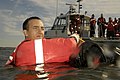 Heat escape lessening position

Sponsored Health Resource

W8MD Weight Loss, Sleep & MedSpa
Looking for physician-supervised weight loss, semaglutide, tirzepatide, or GLP-1 receptor agonist options? W8MD helps eligible patients in New York City, Brooklyn, New Jersey, Connecticut, Pennsylvania, Delaware, and greater Philadelphia with medical weight loss, sleep medicine, and long-term maintenance support.
GLP-1 specials: Affordable GLP-1 injections NYC and Philadelphia starting from $29.99/week and up for semaglutide with insurance accepted for qualifying visits, and $45/week and up for tirzepatide with insurance accepted for qualifying visits. Self-pay options start from $59.99/week and up for semaglutide and $69.99/week and up for tirzepatide.
Medical weight loss NYC | Affordable GLP-1 injections NYC | Budget GLP-1 weight loss shots Philadelphia | New Jersey medical weight loss | NYC medical weight loss | Philadelphia medical weight loss | Sleep clinic NYC | W8MD's Philadelphia GLP-1 doctor | Weight loss prescriptions NYC
Book a W8MD appointment · View GLP-1 specials
Paid promotional message. Eligibility, pricing, insurance coverage, medication availability, and results vary. Medical evaluation required.

Medical Disclaimer: WikiMD is for informational purposes only and is not a substitute for professional medical advice. Content may be inaccurate or outdated and should not be used for diagnosis or treatment. Always consult your healthcare provider for medical decisions. Verify information with trusted sources such as CDC.gov and NIH.gov. By using this site, you agree that WikiMD is not liable for any outcomes related to its content. See full disclaimer.
Credits:Most images are courtesy of Wikimedia commons, and templates, categories Wikipedia, licensed under CC BY SA or similar.
Translate page: - East Asian
中文,
日本,
한국어,
South Asian
हिन्दी,
தமிழ்,
తెలుగు,
Urdu,
ಕನ್ನಡ,
Southeast Asian
Indonesian,
Vietnamese,
Thai,
မြန်မာဘာသာ,
বাংলা
European
español,
Deutsch,
français,
Greek,
português do Brasil,
polski,
română,
русский,
Nederlands,
norsk,
svenska,
suomi,
Italian
Middle Eastern & African
عربى,
Turkish,
Persian,
Hebrew,
Afrikaans,
isiZulu,
Kiswahili,
Other
Bulgarian,
Hungarian,
Czech,
Swedish,
മലയാളം,
मराठी,
ਪੰਜਾਬੀ,
ગુજરાતી,
Portuguese,
Ukrainian

