Harm reduction
Harm Reduction is a set of practical strategies and ideas aimed at reducing negative consequences associated with drug use. Harm Reduction is also a movement for social justice built on a belief in, and respect for, the rights of people who use drugs.
Definition[edit]
Harm reduction refers to policies, programmes and practices that aim to minimise negative health, social and legal impacts associated with drug use, drug policies and drug laws. Harm reduction is grounded in justice and human rights - it focuses on positive change and on working with people without judgement, coercion, discrimination, or requiring that they stop using drugs as a precondition of support.
Principles[edit]
Harm reduction incorporates a spectrum of strategies from safer use, to managed use to abstinence to meet drug users "where they're at," addressing conditions of use along with the use itself. Because harm reduction demands that interventions and policies designed to serve drug users reflect specific individual and community needs, there is no universal definition of or formula for implementing harm reduction.
Strategies[edit]
Harm reduction strategies are designed to mitigate the health risks associated with drug use, such as overdose, HIV, hepatitis C, addiction, and death. These strategies include needle and syringe programmes, opioid substitution therapy, overdose prevention and reversal, psychosocial support, and provision of information on safer drug use.
Criticism[edit]
Critics of harm reduction typically believe that tolerating risky or illegal behaviour sends a message to the community that such behaviours are acceptable. They argue that harm reduction strategies have the potential to cause an increase in drug use and related harms.
See Also[edit]
References[edit]

This WikiMD article can only be edited by registered and verified editors. You can log in or register.
Harm reduction[edit]
-
 Needle exchange program
 -
 Drug paraphernalia for sale - harm reduction
 -
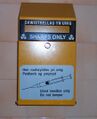 Caernarfon women's toilets
 -
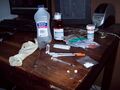 Injection kit
 -
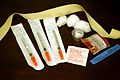 Who needs a virtual world?


Medical Disclaimer: WikiMD is for informational purposes only and is not a substitute for professional medical advice. Content may be inaccurate or outdated and should not be used for diagnosis or treatment. Always consult your healthcare provider for medical decisions. Verify information with trusted sources such as CDC.gov and NIH.gov. By using this site, you agree that WikiMD is not liable for any outcomes related to its content. See full disclaimer.
Credits:Most images are courtesy of Wikimedia commons, and templates, categories Wikipedia, licensed under CC BY SA or similar.
Translate page: - East Asian
中文,
日本,
한국어,
South Asian
हिन्दी,
தமிழ்,
తెలుగు,
Urdu,
ಕನ್ನಡ,
Southeast Asian
Indonesian,
Vietnamese,
Thai,
မြန်မာဘာသာ,
বাংলা
European
español,
Deutsch,
français,
Greek,
português do Brasil,
polski,
română,
русский,
Nederlands,
norsk,
svenska,
suomi,
Italian
Middle Eastern & African
عربى,
Turkish,
Persian,
Hebrew,
Afrikaans,
isiZulu,
Kiswahili,
Other
Bulgarian,
Hungarian,
Czech,
Swedish,
മലയാളം,
मराठी,
ਪੰਜਾਬੀ,
ગુજરાતી,
Portuguese,
Ukrainian

