Halogen
Halogen is a group of five chemical elements in the periodic table. They are part of Group 17 (VIIA) elements and consist of: fluorine (F), chlorine (Cl), bromine (Br), iodine (I), and astatine (At). The term "halogen" means "salt-former" and compounds containing halogens are called "salts".
Properties[edit]
All halogens have 7 electrons in their outer shells, giving them the ability to gain an electron to form anions with a -1 charge. They are nonmetals and have similar properties among each other in many sorts of chemical reactions. Halogens are typically reactive and can be harmful or lethal to biological organisms in sufficient quantities.
Fluorine[edit]
Fluorine is the most reactive of all elements and no chemical substance is capable of freeing it from its compounds. It is a pale yellow, corrosive gas, which reacts with practically all organic and inorganic substances.
Chlorine[edit]
Chlorine is a greenish-yellow gas that combines directly with nearly all elements. It is a vital part of many substances including table salt.
Bromine[edit]
Bromine is the only liquid nonmetallic element at room temperature and it evaporates easily. It is a heavy, mobile, reddish-brown liquid.
Iodine[edit]
Iodine is a grey, lustrous solid. It volatilizes at ambient temperatures into a pretty blue-violet gas with an irritating odor.
Astatine[edit]
Astatine is a radioactive element and it is the heaviest halogen. Its chemical properties are believed to be similar to those of iodine.
Uses[edit]
Halogen elements have many uses. For example, they are used in lighting, in the production of fluorocarbons for refrigeration, and in the manufacture of dyes, plastics, and pharmaceuticals. Halogens are also used in the development of photographic film.
Health Effects[edit]
Exposure to halogens can have detrimental health effects. For instance, exposure to fluorine can cause significant irritation and injury to the eyes, skin, nose and respiratory tract. Chlorine gas can cause difficulty breathing and chest tightness.
See Also[edit]

This WikiMD article can only be edited by registered and verified editors. You can log in or register.
Halogen[edit]
-
 Liquid fluorine
 -
 Chlorine ampoule
 -
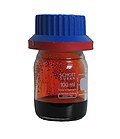 Bromine 25ml
 -
 Iod kristall
 -
 Difluorine 2D dimensions
 -
 Fluorine 3D vdW
 -
 Dichlorine 2D dimensions
 -
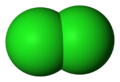 Chlorine 3D vdW
 -
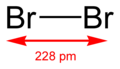 Dibromine 2D dimensions
 -
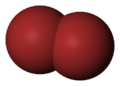 Bromine 3D vdW
 -
 Diiodine 2D dimensions
 -
 Iodine 3D vdW


Medical Disclaimer: WikiMD is for informational purposes only and is not a substitute for professional medical advice. Content may be inaccurate or outdated and should not be used for diagnosis or treatment. Always consult your healthcare provider for medical decisions. Verify information with trusted sources such as CDC.gov and NIH.gov. By using this site, you agree that WikiMD is not liable for any outcomes related to its content. See full disclaimer.
Credits:Most images are courtesy of Wikimedia commons, and templates, categories Wikipedia, licensed under CC BY SA or similar.
Translate page: - East Asian
中文,
日本,
한국어,
South Asian
हिन्दी,
தமிழ்,
తెలుగు,
Urdu,
ಕನ್ನಡ,
Southeast Asian
Indonesian,
Vietnamese,
Thai,
မြန်မာဘာသာ,
বাংলা
European
español,
Deutsch,
français,
Greek,
português do Brasil,
polski,
română,
русский,
Nederlands,
norsk,
svenska,
suomi,
Italian
Middle Eastern & African
عربى,
Turkish,
Persian,
Hebrew,
Afrikaans,
isiZulu,
Kiswahili,
Other
Bulgarian,
Hungarian,
Czech,
Swedish,
മലയാളം,
मराठी,
ਪੰਜਾਬੀ,
ગુજરાતી,
Portuguese,
Ukrainian

