Tonkotsu ramen
Tonkotsu ramen is a type of ramen that originated in Fukuoka, on the Kyushu island of Japan. It is known for its rich, milky, pork-bone broth and its thin, non-curly and resilient noodles.
History[edit]
Tonkotsu ramen was first created in the early 20th century in the city of Kurume, Fukuoka prefecture. It was originally intended as an affordable, easily-prepared food for laborers at fish markets. Over time, it gained popularity and spread throughout Japan and eventually to other parts of the world.
Preparation[edit]
The broth for tonkotsu ramen is made by boiling pork bones for a long period of time, often over 12 hours. This process extracts the collagen, marrow and fat from the bones, creating a creamy, flavorful soup. The noodles used in tonkotsu ramen are thin and straight, and are typically served al dente. The dish is often garnished with ingredients such as sliced pork belly, green onions, nori (seaweed), and menma (bamboo shoots).
Variations[edit]
There are several regional variations of tonkotsu ramen. In Hakata, the local variety of tonkotsu ramen features extremely thin noodles and minimal toppings. In Kumamoto, another city in Kyushu, the local tonkotsu ramen is known for its addition of roasted garlic and garlic oil.
In popular culture[edit]
Tonkotsu ramen has been featured in various forms of media, including films, television shows, and manga, such as the popular series Naruto. It has also been the subject of numerous food travel shows, highlighting its popularity both in Japan and internationally.
See also[edit]

This Japanese cuisine related article is a stub. You can help WikiMD by expanding it.

-
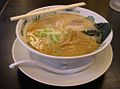 Tonkotsu ramen
 -
 Tonkotsu ramen
 -
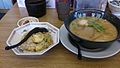 Tonkotsu ramen


Medical Disclaimer: WikiMD is for informational purposes only and is not a substitute for professional medical advice. Content may be inaccurate or outdated and should not be used for diagnosis or treatment. Always consult your healthcare provider for medical decisions. Verify information with trusted sources such as CDC.gov and NIH.gov. By using this site, you agree that WikiMD is not liable for any outcomes related to its content. See full disclaimer.
Credits:Most images are courtesy of Wikimedia commons, and templates, categories Wikipedia, licensed under CC BY SA or similar.
Translate page: - East Asian
中文,
日本,
한국어,
South Asian
हिन्दी,
தமிழ்,
తెలుగు,
Urdu,
ಕನ್ನಡ,
Southeast Asian
Indonesian,
Vietnamese,
Thai,
မြန်မာဘာသာ,
বাংলা
European
español,
Deutsch,
français,
Greek,
português do Brasil,
polski,
română,
русский,
Nederlands,
norsk,
svenska,
suomi,
Italian
Middle Eastern & African
عربى,
Turkish,
Persian,
Hebrew,
Afrikaans,
isiZulu,
Kiswahili,
Other
Bulgarian,
Hungarian,
Czech,
Swedish,
മലയാളം,
मराठी,
ਪੰਜਾਬੀ,
ગુજરાતી,
Portuguese,
Ukrainian

