Greenlandic cuisine
Greenlandic Cuisine is the traditional food consumed by the indigenous people of Greenland, known as the Inuit. The cuisine is primarily based on the animals that can be hunted in the local area, such as seal, whale, fish, and game animals like reindeer and hare.
History[edit]
Greenlandic cuisine has a long history, dating back to the Thule people, the ancestors of the modern Inuit. The Thule were hunter-gatherers, and their diet was heavily based on the animals they could hunt and fish. This tradition has continued into modern times, with many Greenlanders still relying on hunting and fishing for their food.
Ingredients[edit]
The primary ingredients in Greenlandic cuisine are the meats of animals that can be hunted in the local area. This includes seal, whale, fish, reindeer, and hare. These meats are often eaten raw or dried, but can also be cooked or fermented. In addition to meat, Greenlandic cuisine also includes a variety of seafood, including shrimp, halibut, and Greenland halibut.
Dishes[edit]
There are many traditional dishes in Greenlandic cuisine. One of the most common is suaasat, a soup made from seal, whale, reindeer, or bird meat. Another popular dish is mattak, which is raw whale skin with a little bit of blubber. Kiviak is a traditional wintertime dish made by fermenting birds in a seal skin.
Modern Greenlandic Cuisine[edit]
In recent years, there has been a movement to modernize Greenlandic cuisine and make it more appealing to tourists. This has led to the creation of new dishes that combine traditional Greenlandic ingredients with modern cooking techniques. For example, some restaurants now serve sushi made with local fish, or reindeer meat cooked in a style similar to a French ragout.
See Also[edit]

-
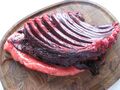 Seal meat
 -
 Turbot cheek
 -
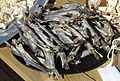 Dried ammasat
 -
 Crowberries
 -
 Greenland Brewhouse beers
 -
 Vegetables and fruit section


Medical Disclaimer: WikiMD is for informational purposes only and is not a substitute for professional medical advice. Content may be inaccurate or outdated and should not be used for diagnosis or treatment. Always consult your healthcare provider for medical decisions. Verify information with trusted sources such as CDC.gov and NIH.gov. By using this site, you agree that WikiMD is not liable for any outcomes related to its content. See full disclaimer.
Credits:Most images are courtesy of Wikimedia commons, and templates, categories Wikipedia, licensed under CC BY SA or similar.
Translate page: - East Asian
中文,
日本,
한국어,
South Asian
हिन्दी,
தமிழ்,
తెలుగు,
Urdu,
ಕನ್ನಡ,
Southeast Asian
Indonesian,
Vietnamese,
Thai,
မြန်မာဘာသာ,
বাংলা
European
español,
Deutsch,
français,
Greek,
português do Brasil,
polski,
română,
русский,
Nederlands,
norsk,
svenska,
suomi,
Italian
Middle Eastern & African
عربى,
Turkish,
Persian,
Hebrew,
Afrikaans,
isiZulu,
Kiswahili,
Other
Bulgarian,
Hungarian,
Czech,
Swedish,
മലയാളം,
मराठी,
ਪੰਜਾਬੀ,
ગુજરાતી,
Portuguese,
Ukrainian

