Green goddess dressing
Green Goddess Dressing is a type of salad dressing, notable for its vibrant green color and creamy texture. It originated in the United States and has become a popular choice for salads, dips, and marinades.
History[edit]
Green Goddess Dressing was first created in the 1920s in San Francisco at the Palace Hotel. The dressing was made as a tribute to the actor George Arliss, who was starring in the play The Green Goddess at the time. The chef at the Palace Hotel, Philip Roemer, is credited with the creation of this dressing.
Ingredients[edit]
The primary ingredients in Green Goddess Dressing are mayonnaise, sour cream, chervil, chives, anchovy, tarragon, lemon juice, and pepper. The green color of the dressing comes from the use of fresh herbs. Variations of the recipe may include ingredients such as avocado, yogurt, or parsley.
Usage[edit]
Green Goddess Dressing is commonly used as a dressing for salads, but it can also be used as a dip for vegetables or a marinade for meat. Its creamy texture and tangy flavor make it a versatile condiment that can enhance a variety of dishes.
Popularity[edit]
The popularity of Green Goddess Dressing has fluctuated over the years. It was particularly popular in the 1970s and 1980s, and has seen a resurgence in recent years as part of the trend towards fresh, homemade dressings and dips.
See Also[edit]

-
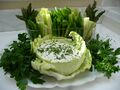 Green goddess dressing


Medical Disclaimer: WikiMD is for informational purposes only and is not a substitute for professional medical advice. Content may be inaccurate or outdated and should not be used for diagnosis or treatment. Always consult your healthcare provider for medical decisions. Verify information with trusted sources such as CDC.gov and NIH.gov. By using this site, you agree that WikiMD is not liable for any outcomes related to its content. See full disclaimer.
Credits:Most images are courtesy of Wikimedia commons, and templates, categories Wikipedia, licensed under CC BY SA or similar.
Translate page: - East Asian
中文,
日本,
한국어,
South Asian
हिन्दी,
தமிழ்,
తెలుగు,
Urdu,
ಕನ್ನಡ,
Southeast Asian
Indonesian,
Vietnamese,
Thai,
မြန်မာဘာသာ,
বাংলা
European
español,
Deutsch,
français,
Greek,
português do Brasil,
polski,
română,
русский,
Nederlands,
norsk,
svenska,
suomi,
Italian
Middle Eastern & African
عربى,
Turkish,
Persian,
Hebrew,
Afrikaans,
isiZulu,
Kiswahili,
Other
Bulgarian,
Hungarian,
Czech,
Swedish,
മലയാളം,
मराठी,
ਪੰਜਾਬੀ,
ગુજરાતી,
Portuguese,
Ukrainian

