Glycoprotein
Glycoprotein is a type of protein that has carbohydrate groups attached to the polypeptide chain. The carbohydrates are attached to the proteins in a process called glycosylation. Glycoproteins play a variety of important roles in biological systems, including cell-cell recognition, immune response, and protection of proteins from degradation.
Structure[edit]
Glycoproteins are composed of a protein backbone with one or more covalently attached carbohydrates. The carbohydrates can be simple monosaccharides or complex polysaccharides. The type and arrangement of the carbohydrates can vary widely, leading to a great diversity of glycoprotein structures.
Function[edit]
Glycoproteins perform a wide range of functions in the body. They are involved in cell-cell recognition, which is crucial for the immune response. They also play a role in the protection of proteins from degradation, as the carbohydrate groups can shield the protein from enzymes that would otherwise break it down.
In addition, glycoproteins are involved in a variety of other biological processes, including:
- Cell adhesion: Glycoproteins on the surface of cells can bind to other cells or to the extracellular matrix, helping to hold cells together.
- Signal transduction: Some glycoproteins act as receptors on the cell surface, transmitting signals from the outside of the cell to the inside.
- Transport: Some glycoproteins act as transport proteins, carrying other molecules across cell membranes.
Examples[edit]
There are many examples of glycoproteins in the human body. Some of the most well-known include:
- Immunoglobulins: These are glycoproteins that function as antibodies in the immune system.
- Erythropoietin: This is a glycoprotein hormone that stimulates the production of red blood cells.
- Mucins: These are glycoproteins that are a major component of mucus, providing lubrication and protection in many body tissues.
See also[edit]

This WikiMD article can only be edited by registered and verified editors. You can log in or register.
-
Glycoprotein structure
-
Glycoprotein sugar chains
-
Glycosylation of a polypeptide
-
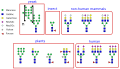 Variety of glycans

Advertise on WikiMD — 81,000+ full articles, ~900,000 total pages, ~250 million page views. Global reach, limited time promotional rates from $1/page/day. Learn more · View stats

Translate page: - East Asian
中文,
日本,
한국어,
South Asian
हिन्दी,
தமிழ்,
తెలుగు,
Urdu,
ಕನ್ನಡ,
Southeast Asian
Indonesian,
Vietnamese,
Thai,
မြန်မာဘာသာ,
বাংলা
European
español,
Deutsch,
français,
Greek,
português do Brasil,
polski,
română,
русский,
Nederlands,
norsk,
svenska,
suomi,
Italian
Middle Eastern & African
عربى,
Turkish,
Persian,
Hebrew,
Afrikaans,
isiZulu,
Kiswahili,
Other
Bulgarian,
Hungarian,
Czech,
Swedish,
മലയാളം,
मराठी,
ਪੰਜਾਬੀ,
ગુજરાતી,
Portuguese,
Ukrainian
About WikiMD • Contact • Disclaimer • Privacy • Copyright • Site statistics
Some content and images may originate from Wikimedia Commons or Wikipedia and remain subject to their stated licenses. Unless otherwise noted, eligible WikiMD content is available under CC BY-SA 4.0.
WikiMD Wellnesspedia — Free health & wellness information for patients, students, and health professionals.


