Geothermal power
Geothermal power is a form of renewable energy that harnesses the natural heat energy stored within the earth. This heat energy, which is generated by the decay of radioactive elements within the earth's core, can be used to generate electricity or provide heating and cooling for buildings.
History[edit]
The use of geothermal energy dates back to ancient times, when people used hot springs for bathing and cooking. The first industrial use of geothermal energy occurred in the late 19th century, when a company in Italy used steam from a natural vent to generate electricity. Today, geothermal power plants are in operation in over 20 countries around the world.
Geothermal Resources[edit]
Geothermal resources can be classified into three main types: hydrothermal, geopressurized, and hot dry rock. Hydrothermal resources, which are the most commonly used, consist of hot water or steam trapped in porous rock. Geopressurized resources consist of hot water and natural gas under high pressure, while hot dry rock resources consist of hot, non-porous rock.
Power Generation[edit]
Geothermal power plants use heat from the earth to generate electricity in one of three ways: dry steam, flash steam, or binary cycle. Dry steam plants use steam directly from a geothermal reservoir to turn a turbine and generate electricity. Flash steam plants use high-pressure hot water to produce steam, which is then used to generate electricity. Binary cycle plants use a secondary fluid with a lower boiling point than water to generate steam, which is then used to turn a turbine.
Environmental Impact[edit]
While geothermal power is a renewable and sustainable form of energy, it does have some environmental impacts. These include the release of greenhouse gases, the potential for ground subsidence, and the disposal of geothermal fluids, which can contain low levels of toxic materials.
Future of Geothermal Power[edit]
The future of geothermal power looks promising, with advances in technology making it possible to access deeper and hotter geothermal resources. In addition, the use of enhanced geothermal systems (EGS), which involve the artificial creation of geothermal reservoirs, could significantly increase the amount of geothermal power that can be generated.
 | This article about energy, its collection, its distribution, or its uses is a stub. You can help WikiMD by expanding the page. |
-
Top 5 Geothermal-Electric Countries
-
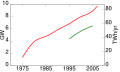 Geothermal Capacity
 -
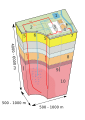 EGS Diagram
 -
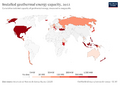 Installed Geothermal Energy Capacity
 -
Staufen Cracks
-
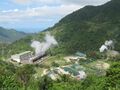 Puhagan Geothermal Plant
 -
Central Geotérmica de Berlín
-
World Geothermal Generation Yearly
-
World Geothermal Generation 2021
-
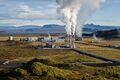 Nesjavellir Power Plant


Sponsored Health Resource

W8MD Weight Loss, Sleep & MedSpa
Looking for physician-supervised weight loss, semaglutide, tirzepatide, or GLP-1 receptor agonist options? W8MD helps eligible patients in New York City, Brooklyn, New Jersey, Connecticut, Pennsylvania, Delaware, and greater Philadelphia with medical weight loss, sleep medicine, and long-term maintenance support.
GLP-1 specials: Affordable GLP-1 injections NYC and Philadelphia starting from $29.99/week and up for semaglutide with insurance accepted for qualifying visits, and $45/week and up for tirzepatide with insurance accepted for qualifying visits. Self-pay options start from $59.99/week and up for semaglutide and $69.99/week and up for tirzepatide.
- Medical weight loss NYC
- Affordable GLP-1 injections NYC
- Budget GLP-1 weight loss shots Philadelphia
- New Jersey medical weight loss
- NYC medical weight loss blog
- Philadelphia weight loss blog
- Sleep medicine and sleep apnea services
- W8MD MedSpa and wellness
Book a W8MD appointment · View GLP-1 specials
Paid promotional message. Eligibility, pricing, insurance coverage, medication availability, and results vary. Medical evaluation required.

Medical Disclaimer: WikiMD is for informational purposes only and is not a substitute for professional medical advice. Content may be inaccurate or outdated and should not be used for diagnosis or treatment. Always consult your healthcare provider for medical decisions. Verify information with trusted sources such as CDC.gov and NIH.gov. By using this site, you agree that WikiMD is not liable for any outcomes related to its content. See full disclaimer.
Credits:Most images are courtesy of Wikimedia commons, and templates, categories Wikipedia, licensed under CC BY SA or similar.
Translate page: - East Asian
中文,
日本,
한국어,
South Asian
हिन्दी,
தமிழ்,
తెలుగు,
Urdu,
ಕನ್ನಡ,
Southeast Asian
Indonesian,
Vietnamese,
Thai,
မြန်မာဘာသာ,
বাংলা
European
español,
Deutsch,
français,
Greek,
português do Brasil,
polski,
română,
русский,
Nederlands,
norsk,
svenska,
suomi,
Italian
Middle Eastern & African
عربى,
Turkish,
Persian,
Hebrew,
Afrikaans,
isiZulu,
Kiswahili,
Other
Bulgarian,
Hungarian,
Czech,
Swedish,
മലയാളം,
मराठी,
ਪੰਜਾਬੀ,
ગુજરાતી,
Portuguese,
Ukrainian


