Georges Hébert
Georges Hébert (27 April 1875 – 2 August 1957) was a pioneering French physical educator, naval officer, and sports theorist who developed a system of physical education that emphasized natural movements and physical fitness. His philosophy and methods have had a significant influence on modern physical training and sports, particularly through the development of the Méthode Naturelle.
Early Life[edit]
Georges Hébert was born in Paris, France. From a young age, he was exposed to physical activities and the importance of physical fitness, which laid the foundation for his later work in physical education. His experiences as a naval officer further shaped his understanding of physical training and the need for a comprehensive system that could be applied universally.
Méthode Naturelle[edit]
The Méthode Naturelle (Natural Method) developed by Hébert is a holistic approach to physical education that emphasizes the development of physical abilities in a natural and functional manner. It is based on the premise that the human body is designed for movement and that physical fitness should be achieved through natural movements such as running, jumping, climbing, and swimming.
Hébert's system is structured around ten fundamental groups of exercises:
- Walking
- Running
- Jumping
- Quadrupedal Movement
- Climbing
- Balancing
- Throwing
- Lifting
- Self-defense
- Swimming
These activities are designed to develop strength, endurance, agility, speed, and coordination in a balanced and integrated way. Hébert also emphasized the importance of outdoor training and the use of natural obstacles to challenge the body and mind.
Philosophy[edit]
Hébert's philosophy of physical education was encapsulated in the motto, "Être fort pour être utile" ("Be strong to be useful"). He believed that physical training should not only aim at improving individual health and fitness but also at preparing individuals to be useful to society. This included the ability to perform rescues, provide first aid, and assist in emergencies. Hébert's approach was holistic, focusing on the development of the whole person, including moral and ethical education alongside physical training.
Legacy[edit]
Georges Hébert's work has had a lasting impact on the field of physical education and training. His Méthode Naturelle has influenced various modern fitness movements, including parkour and obstacle course racing. The principles of natural movement and functional fitness continue to be relevant in contemporary fitness and rehabilitation programs.
Hébert's legacy is also preserved through the Fédération Française des Sports d'Obstacles (FFSO), which promotes obstacle course racing and training methods inspired by his work. Additionally, his writings and teachings continue to inspire educators and trainers worldwide.
See Also[edit]

-
 Georges_Hébert
 -
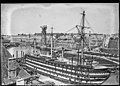 Port Militaire de Brest
 -
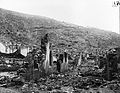 Saint Pierre
 -
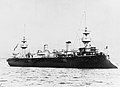 French Cruiser Suchet
 -
 Discobolus in National Roman Museum
 -
 Melchior de Polignac à Jean Bouin 1913
 -
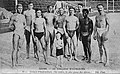 Instructeurs Collège Athlètes
 -
 The 4 Quadrants of Hébertism
 -
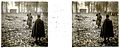 Général de Maudhuy and Lieutenant de Vaisseau Hébert
 -
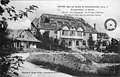 Collège des Athlètes Reims
 -
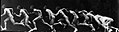 Chronophotographie d'un Coureur Demeny
 -
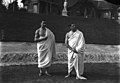 Reims Collège d'Athlètes Bouin and Lieutenant Hébert


Ad. Transform your life with W8MD's
GLP-1 weight loss injections special from $29.99 with insurance
|
WikiMD Medical Encyclopedia |
Medical Disclaimer: WikiMD is for informational purposes only and is not a substitute for professional medical advice. Content may be inaccurate or outdated and should not be used for diagnosis or treatment. Always consult your healthcare provider for medical decisions. Verify information with trusted sources such as CDC.gov and NIH.gov. By using this site, you agree that WikiMD is not liable for any outcomes related to its content. See full disclaimer.
Credits:Most images are courtesy of Wikimedia commons, and templates, categories Wikipedia, licensed under CC BY SA or similar.
Translate this page: - East Asian
中文,
日本,
한국어,
South Asian
हिन्दी,
தமிழ்,
తెలుగు,
Urdu,
ಕನ್ನಡ,
Southeast Asian
Indonesian,
Vietnamese,
Thai,
မြန်မာဘာသာ,
বাংলা
European
español,
Deutsch,
français,
Greek,
português do Brasil,
polski,
română,
русский,
Nederlands,
norsk,
svenska,
suomi,
Italian
Middle Eastern & African
عربى,
Turkish,
Persian,
Hebrew,
Afrikaans,
isiZulu,
Kiswahili,
Other
Bulgarian,
Hungarian,
Czech,
Swedish,
മലയാളം,
मराठी,
ਪੰਜਾਬੀ,
ગુજરાતી,
Portuguese,
Ukrainian
