Geng (dish)
Geng is a traditional Thai dish, typically served as a soup or curry. The dish is known for its rich flavors, which are achieved through the use of various herbs and spices, including lemongrass, galangal, and kaffir lime leaves. Geng is often made with a variety of proteins, such as chicken, beef, pork, or seafood, and is usually served with rice.
History[edit]
The origins of Geng can be traced back to ancient Thailand, where it was a staple dish in many households. The dish has evolved over the centuries, with different regions of Thailand developing their own unique variations. Despite these regional differences, the core elements of Geng – a rich, flavorful broth made with herbs and spices, and a protein source – have remained consistent.
Preparation[edit]
The preparation of Geng begins with the making of a paste from herbs and spices. This paste is then fried in oil to release its flavors, before the protein is added and cooked until tender. The dish is then simmered with coconut milk or water, depending on the desired consistency. Additional ingredients, such as vegetables or noodles, may also be added.
Variations[edit]
There are many variations of Geng, each with its own unique flavor profile. Some of the most popular variations include:
- Geng Gari: A mild curry made with chicken, potatoes, and onions.
- Geng Kiew Wan: A green curry made with chicken, eggplant, and basil.
- Geng Dang: A red curry made with beef, bamboo shoots, and basil.
Cultural Significance[edit]
Geng is more than just a dish in Thai culture; it is a symbol of hospitality and a staple at social gatherings. The dish is often served at family meals, festivals, and religious ceremonies, and is a common offering at Buddhist temples.
See Also[edit]
 | This article about Thai cuisine is a stub. You can help WikiMD by expanding the page. |

- Geng (dish)
-
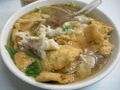 Chinese-style geng with meat, fish cakes, and squid
 -
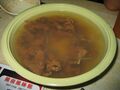 Beef thick soup


Medical Disclaimer: WikiMD is for informational purposes only and is not a substitute for professional medical advice. Content may be inaccurate or outdated and should not be used for diagnosis or treatment. Always consult your healthcare provider for medical decisions. Verify information with trusted sources such as CDC.gov and NIH.gov. By using this site, you agree that WikiMD is not liable for any outcomes related to its content. See full disclaimer.
Credits:Most images are courtesy of Wikimedia commons, and templates, categories Wikipedia, licensed under CC BY SA or similar.
Translate page: - East Asian
中文,
日本,
한국어,
South Asian
हिन्दी,
தமிழ்,
తెలుగు,
Urdu,
ಕನ್ನಡ,
Southeast Asian
Indonesian,
Vietnamese,
Thai,
မြန်မာဘာသာ,
বাংলা
European
español,
Deutsch,
français,
Greek,
português do Brasil,
polski,
română,
русский,
Nederlands,
norsk,
svenska,
suomi,
Italian
Middle Eastern & African
عربى,
Turkish,
Persian,
Hebrew,
Afrikaans,
isiZulu,
Kiswahili,
Other
Bulgarian,
Hungarian,
Czech,
Swedish,
മലയാളം,
मराठी,
ਪੰਜਾਬੀ,
ગુજરાતી,
Portuguese,
Ukrainian

