Genetically modified maize
Genetically Modified Maize (GM maize) is a biotechnologically engineered version of the traditional maize crop (Zea mays), designed to exhibit enhanced agronomic traits such as increased yield, resistance to pests and diseases, and tolerance to various environmental stresses. The modification of maize involves the insertion or deletion of genes using recombinant DNA technology to achieve desired characteristics, which can significantly contribute to food security and agricultural sustainability.
History and Development[edit]
The development of GM maize began in the early 1980s, following advances in genetic engineering technology. The first genetically modified maize was approved for commercial production in the United States in 1996. Since then, the cultivation of GM maize has expanded globally, with significant adoption in countries such as Brazil, Argentina, Canada, and South Africa.
Types of Genetically Modified Maize[edit]
There are several types of GM maize, each engineered for specific purposes. These include:
- Herbicide-Tolerant (HT) Maize: Engineered to tolerate specific broad-spectrum herbicides, allowing farmers to control weeds without harming the crop.
- Insect-Resistant Maize: Contains genes from the bacterium Bacillus thuringiensis (Bt), which produces a protein toxic to specific insects, reducing the need for chemical insecticides.
- Drought-Tolerant Maize: Modified to withstand periods of low water availability, enhancing resilience to drought conditions.
- Nutritionally Enhanced Maize: Engineered to contain higher levels of vitamins and minerals, such as Vitamin A and iron, to address nutritional deficiencies.
Regulation and Safety[edit]
The introduction of GM maize has raised regulatory and safety concerns. Regulatory bodies around the world, including the EPA, EFSA, and others, have established stringent guidelines for the approval and cultivation of GM crops. These guidelines require comprehensive risk assessments to evaluate the potential impact on human health and the environment.
Benefits and Challenges[edit]
The adoption of GM maize has been associated with several benefits, including increased crop yields, reduced agricultural inputs such as pesticides and water, and improved nutritional content of the maize. However, the cultivation of GM maize also presents challenges, including concerns over biodiversity, the development of herbicide and insecticide resistance, and the socio-economic impacts on smallholder farmers.
Future Prospects[edit]
Research and development in the field of genetic modification continue to evolve, with ongoing efforts to introduce new traits into maize and other crops. These include enhanced nutritional profiles, increased tolerance to multiple environmental stresses, and the production of pharmaceutical compounds. The future of GM maize will likely involve the integration of advanced biotechnological tools, such as CRISPR-Cas9 gene editing, to achieve more precise and efficient genetic modifications.
See Also[edit]
| Genetically Modified Food | ||||||||||
|---|---|---|---|---|---|---|---|---|---|---|
This genetically modified food related article is a stub.
|
 | This agriculture article is a stub. You can help WikiMD by expanding the page. |
-
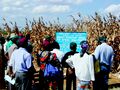 Genetically modified maize in Africa
 -
 Corn borer


Sponsored Health Resource

W8MD Weight Loss, Sleep & MedSpa
Looking for physician-supervised weight loss, semaglutide, tirzepatide, or GLP-1 receptor agonist options? W8MD helps eligible patients in New York City, Brooklyn, New Jersey, Connecticut, Pennsylvania, Delaware, and greater Philadelphia with medical weight loss, sleep medicine, and long-term maintenance support.
GLP-1 specials: Affordable GLP-1 injections NYC and Philadelphia starting from $29.99/week and up for semaglutide with insurance accepted for qualifying visits, and $45/week and up for tirzepatide with insurance accepted for qualifying visits. Self-pay options start from $59.99/week and up for semaglutide and $69.99/week and up for tirzepatide.
Medical weight loss NYC | Affordable GLP-1 injections NYC | Budget GLP-1 weight loss shots Philadelphia | New Jersey medical weight loss | NYC medical weight loss | Philadelphia medical weight loss | Sleep clinic NYC | W8MD's Philadelphia GLP-1 doctor | Weight loss prescriptions NYC
Book a W8MD appointment · View GLP-1 specials
Paid promotional message. Eligibility, pricing, insurance coverage, medication availability, and results vary. Medical evaluation required.

Medical Disclaimer: WikiMD is for informational purposes only and is not a substitute for professional medical advice. Content may be inaccurate or outdated and should not be used for diagnosis or treatment. Always consult your healthcare provider for medical decisions. Verify information with trusted sources such as CDC.gov and NIH.gov. By using this site, you agree that WikiMD is not liable for any outcomes related to its content. See full disclaimer.
Credits:Most images are courtesy of Wikimedia commons, and templates, categories Wikipedia, licensed under CC BY SA or similar.
Translate page: - East Asian
中文,
日本,
한국어,
South Asian
हिन्दी,
தமிழ்,
తెలుగు,
Urdu,
ಕನ್ನಡ,
Southeast Asian
Indonesian,
Vietnamese,
Thai,
မြန်မာဘာသာ,
বাংলা
European
español,
Deutsch,
français,
Greek,
português do Brasil,
polski,
română,
русский,
Nederlands,
norsk,
svenska,
suomi,
Italian
Middle Eastern & African
عربى,
Turkish,
Persian,
Hebrew,
Afrikaans,
isiZulu,
Kiswahili,
Other
Bulgarian,
Hungarian,
Czech,
Swedish,
മലയാളം,
मराठी,
ਪੰਜਾਬੀ,
ગુજરાતી,
Portuguese,
Ukrainian

