Gene dosage
Gene dosage refers to the number of copies of a particular gene present in the genome of an organism. The concept of gene dosage is crucial in understanding the relationship between gene copy number and its phenotypic effects. Changes in gene dosage can have significant implications for an organism's development, health, and disease susceptibility.
Overview[edit]
Gene dosage can vary among individuals within a population due to genetic variations such as copy number variations (CNVs) or aneuploidies. CNVs are structural variations in the genome that involve the duplication or deletion of large segments of DNA, leading to changes in gene dosage. Aneuploidies, on the other hand, result from the gain or loss of entire chromosomes, affecting the dosage of all genes located on the affected chromosome.
Effects of Gene Dosage[edit]
The effects of gene dosage alterations can vary depending on the specific gene and its function. In some cases, an increase in gene dosage can lead to overexpression of a gene, resulting in a phenotypic change. Conversely, a decrease in gene dosage may lead to underexpression or loss of function of the gene, also impacting the phenotype.
Examples[edit]
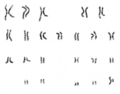
One well-known example of the impact of gene dosage is seen in trisomy 21, also known as Down syndrome. Individuals with Down syndrome have an extra copy of chromosome 21, leading to an increase in gene dosage for genes located on this chromosome. This results in characteristic physical features and developmental delays associated with the syndrome.
Another example is the gene dosage effect in cancer. Amplification of oncogenes, such as the HER2 gene in breast cancer, can lead to increased gene dosage and promote tumor growth. Conversely, deletions or mutations in tumor suppressor genes can result in decreased gene dosage, contributing to cancer development.
Research and Implications[edit]
Studying gene dosage variations is essential for understanding the genetic basis of various diseases and conditions. Advances in genomic technologies have enabled researchers to investigate gene dosage effects on a genome-wide scale, providing insights into the molecular mechanisms underlying genetic disorders.
Understanding gene dosage also has implications for personalized medicine, as gene dosage variations can influence individual responses to drugs and therapies. Pharmacogenomic studies take into account gene dosage differences to optimize treatment strategies and minimize adverse effects.
See also[edit]
 | This medical article is a stub. You can help WikiMD by expanding the page. |
-
 Gene_dosage
 -
Gene_dosage

Sponsored Health Resource

W8MD Weight Loss, Sleep & MedSpa
Looking for physician-supervised weight loss, semaglutide, tirzepatide, or GLP-1 receptor agonist options? W8MD helps eligible patients in New York City, Brooklyn, New Jersey, Connecticut, Pennsylvania, Delaware, and greater Philadelphia with medical weight loss, sleep medicine, and long-term maintenance support.
GLP-1 specials: Affordable GLP-1 injections NYC and Philadelphia starting from $29.99/week and up for semaglutide with insurance accepted for qualifying visits, and $45/week and up for tirzepatide with insurance accepted for qualifying visits. Self-pay options start from $59.99/week and up for semaglutide and $69.99/week and up for tirzepatide.
Medical weight loss NYC | Affordable GLP-1 injections NYC | Budget GLP-1 weight loss shots Philadelphia | New Jersey medical weight loss | NYC medical weight loss | Philadelphia medical weight loss | Sleep clinic NYC | W8MD's Philadelphia GLP-1 doctor | Weight loss prescriptions NYC
Book a W8MD appointment · View GLP-1 specials
Paid promotional message. Eligibility, pricing, insurance coverage, medication availability, and results vary. Medical evaluation required.

Medical Disclaimer: WikiMD is for informational purposes only and is not a substitute for professional medical advice. Content may be inaccurate or outdated and should not be used for diagnosis or treatment. Always consult your healthcare provider for medical decisions. Verify information with trusted sources such as CDC.gov and NIH.gov. By using this site, you agree that WikiMD is not liable for any outcomes related to its content. See full disclaimer.
Credits:Most images are courtesy of Wikimedia commons, and templates, categories Wikipedia, licensed under CC BY SA or similar.
Translate page: - East Asian
中文,
日本,
한국어,
South Asian
हिन्दी,
தமிழ்,
తెలుగు,
Urdu,
ಕನ್ನಡ,
Southeast Asian
Indonesian,
Vietnamese,
Thai,
မြန်မာဘာသာ,
বাংলা
European
español,
Deutsch,
français,
Greek,
português do Brasil,
polski,
română,
русский,
Nederlands,
norsk,
svenska,
suomi,
Italian
Middle Eastern & African
عربى,
Turkish,
Persian,
Hebrew,
Afrikaans,
isiZulu,
Kiswahili,
Other
Bulgarian,
Hungarian,
Czech,
Swedish,
മലയാളം,
मराठी,
ਪੰਜਾਬੀ,
ગુજરાતી,
Portuguese,
Ukrainian


