Gastric emptying study
Gastric emptying study is a medical diagnostic procedure used to evaluate gastric emptying of solids and liquids. It is a type of nuclear medicine study that involves the use of radioactive isotopes to measure the rate at which food leaves the stomach and enters the small intestine.
Procedure[edit]
The patient consumes a meal that contains a small amount of a radioactive substance, usually a type of technetium. The radiation emitted by this substance is detected by a gamma camera, which takes a series of images over several hours. These images are used to calculate the rate of gastric emptying.
Indications[edit]
A gastric emptying study may be ordered for patients who have symptoms suggestive of gastroparesis, such as nausea, vomiting, bloating, early satiety, and abdominal pain. It can also be used to evaluate the effectiveness of treatments for these conditions.
Interpretation[edit]
The rate of gastric emptying is calculated based on the amount of radioactive substance that remains in the stomach at various time points after the meal. A delay in gastric emptying is suggestive of gastroparesis.
Risks[edit]
The risks of a gastric emptying study are minimal. The amount of radiation exposure is low and similar to that of other nuclear medicine studies. There may be a small risk of an allergic reaction to the radioactive substance.
See also[edit]
 | This medical article is a stub. You can help WikiMD by expanding the page. |
 | This gastroenterology article is a stub. You can help WikiMD by expanding the page. |
-
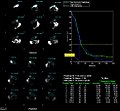 Gastric Emptying


Medical Disclaimer: WikiMD is for informational purposes only and is not a substitute for professional medical advice. Content may be inaccurate or outdated and should not be used for diagnosis or treatment. Always consult your healthcare provider for medical decisions. Verify information with trusted sources such as CDC.gov and NIH.gov. By using this site, you agree that WikiMD is not liable for any outcomes related to its content. See full disclaimer.
Credits:Most images are courtesy of Wikimedia commons, and templates, categories Wikipedia, licensed under CC BY SA or similar.
Translate page: - East Asian
中文,
日本,
한국어,
South Asian
हिन्दी,
தமிழ்,
తెలుగు,
Urdu,
ಕನ್ನಡ,
Southeast Asian
Indonesian,
Vietnamese,
Thai,
မြန်မာဘာသာ,
বাংলা
European
español,
Deutsch,
français,
Greek,
português do Brasil,
polski,
română,
русский,
Nederlands,
norsk,
svenska,
suomi,
Italian
Middle Eastern & African
عربى,
Turkish,
Persian,
Hebrew,
Afrikaans,
isiZulu,
Kiswahili,
Other
Bulgarian,
Hungarian,
Czech,
Swedish,
മലയാളം,
मराठी,
ਪੰਜਾਬੀ,
ગુજરાતી,
Portuguese,
Ukrainian

