Gaiwan

A gaiwan (Chinese: 盖碗; pinyin: gàiwǎn ) is a traditional Chinese lidded bowl used for brewing and drinking tea. It consists of three parts: a bowl, a lid, and a saucer. The gaiwan is an essential tool in Chinese tea culture and is used for both tea brewing and tea tasting.
History[edit]
The gaiwan has a long history in China, dating back to the Ming dynasty (1368–1644). It became popular during this period as tea preparation methods evolved from boiling tea leaves to steeping them. The design of the gaiwan allows for easy control of the brewing process, making it a favored tool among tea connoisseurs.
Design and Function[edit]

The gaiwan is designed to be held in one hand, with the thumb and middle finger supporting the saucer and the index finger resting on the lid. This allows the user to control the steeping time and temperature by adjusting the lid. The lid can be used to stir the tea leaves, smell the aroma, and prevent the leaves from escaping while pouring.
Materials[edit]
Gaiwans are made from various materials, including porcelain, glass, clay, and jade. Each material affects the tea's flavor and aroma differently. Porcelain gaiwans are the most common and are prized for their ability to retain heat and their smooth surface, which does not absorb flavors.

Cultural Significance[edit]
The gaiwan is not only a practical tool but also a symbol of Chinese tea culture. It represents the harmony between nature and humanity, as well as the balance of the five elements in Traditional Chinese Medicine. The act of using a gaiwan is a meditative practice that encourages mindfulness and appreciation of the present moment.
Variations[edit]

Gaiwans come in various shapes, sizes, and designs. Some are simple and utilitarian, while others are elaborately decorated with intricate patterns and motifs. The choice of gaiwan often reflects the user's personal taste and the type of tea being brewed.
Usage[edit]
To use a gaiwan, place the desired amount of tea leaves in the bowl, add hot water, and cover with the lid. After steeping for the appropriate time, the tea can be poured into a cup or directly sipped from the gaiwan. The lid is used to hold back the leaves while pouring.

Related Pages[edit]
Gallery[edit]
-
 A jade gaiwan from the mid-Qing period.
 -
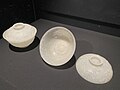 Jade covered bowls with dragon and phoenix motifs.
 -
 A Chinese tea set with three gaiwans.


Medical Disclaimer: WikiMD is for informational purposes only and is not a substitute for professional medical advice. Content may be inaccurate or outdated and should not be used for diagnosis or treatment. Always consult your healthcare provider for medical decisions. Verify information with trusted sources such as CDC.gov and NIH.gov. By using this site, you agree that WikiMD is not liable for any outcomes related to its content. See full disclaimer.
Credits:Most images are courtesy of Wikimedia commons, and templates, categories Wikipedia, licensed under CC BY SA or similar.
Translate page: - East Asian
中文,
日本,
한국어,
South Asian
हिन्दी,
தமிழ்,
తెలుగు,
Urdu,
ಕನ್ನಡ,
Southeast Asian
Indonesian,
Vietnamese,
Thai,
မြန်မာဘာသာ,
বাংলা
European
español,
Deutsch,
français,
Greek,
português do Brasil,
polski,
română,
русский,
Nederlands,
norsk,
svenska,
suomi,
Italian
Middle Eastern & African
عربى,
Turkish,
Persian,
Hebrew,
Afrikaans,
isiZulu,
Kiswahili,
Other
Bulgarian,
Hungarian,
Czech,
Swedish,
മലയാളം,
मराठी,
ਪੰਜਾਬੀ,
ગુજરાતી,
Portuguese,
Ukrainian

