G protein
G protein or guanine nucleotide-binding proteins are a family of proteins involved in transmitting chemical signals outside the cell, and causing changes inside the cell. They communicate signals from a variety of stimuli outside a cell to its interior.
Function[edit]
G proteins are involved in a variety of cellular functions including cell division, cell differentiation, and cell growth. They are also involved in transmitting signals from various stimuli outside a cell to its interior.
Structure[edit]
G proteins are made up of three subunits: alpha (α), beta (β), and gamma (γ). The alpha subunit binds to guanine nucleotides, and has a part in determining the specificity of the G protein for particular receptors.
Types[edit]
There are four main types of G proteins:
- G_s proteins stimulate the production of cyclic AMP (cAMP) from ATP.
- G_i proteins inhibit the production of cAMP from ATP.
- G_q proteins stimulate the formation of inositol trisphosphate (IP3) and diacylglycerol (DAG) from phosphatidylinositol 4,5-bisphosphate (PIP2).
- G_12/13 proteins are involved in the regulation of the cytoskeleton.
Role in disease[edit]
Mutations in G proteins can lead to a variety of diseases, including cancer, diabetes, and Albright's hereditary osteodystrophy.
See also[edit]

This WikiMD article can only be edited by registered and verified editors. You can log in or register.
G_protein[edit]
-
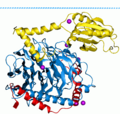 Structure of a G protein
 -
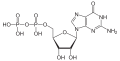 Guanosine diphosphate
 -
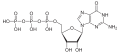 Guanosine triphosphate
 -
 Human G_ protein phylogeny
 -
 GPCR cycle


Sponsored Health Resource

W8MD Weight Loss, Sleep & MedSpa
Looking for physician-supervised weight loss, semaglutide, tirzepatide, or GLP-1 receptor agonist options? W8MD helps eligible patients in New York City, Brooklyn, New Jersey, Connecticut, Pennsylvania, Delaware, and greater Philadelphia with medical weight loss, sleep medicine, and long-term maintenance support.
GLP-1 specials: Affordable GLP-1 injections NYC and Philadelphia starting from $29.99/week and up for semaglutide with insurance accepted for qualifying visits, and $45/week and up for tirzepatide with insurance accepted for qualifying visits. Self-pay options start from $59.99/week and up for semaglutide and $69.99/week and up for tirzepatide.
Medical weight loss NYC | Affordable GLP-1 injections NYC | Budget GLP-1 weight loss shots Philadelphia | New Jersey medical weight loss | NYC medical weight loss | Philadelphia medical weight loss | Sleep clinic NYC | W8MD's Philadelphia GLP-1 doctor | Weight loss prescriptions NYC
Book a W8MD appointment · View GLP-1 specials
Paid promotional message. Eligibility, pricing, insurance coverage, medication availability, and results vary. Medical evaluation required.

Medical Disclaimer: WikiMD is for informational purposes only and is not a substitute for professional medical advice. Content may be inaccurate or outdated and should not be used for diagnosis or treatment. Always consult your healthcare provider for medical decisions. Verify information with trusted sources such as CDC.gov and NIH.gov. By using this site, you agree that WikiMD is not liable for any outcomes related to its content. See full disclaimer.
Credits:Most images are courtesy of Wikimedia commons, and templates, categories Wikipedia, licensed under CC BY SA or similar.
Translate page: - East Asian
中文,
日本,
한국어,
South Asian
हिन्दी,
தமிழ்,
తెలుగు,
Urdu,
ಕನ್ನಡ,
Southeast Asian
Indonesian,
Vietnamese,
Thai,
မြန်မာဘာသာ,
বাংলা
European
español,
Deutsch,
français,
Greek,
português do Brasil,
polski,
română,
русский,
Nederlands,
norsk,
svenska,
suomi,
Italian
Middle Eastern & African
عربى,
Turkish,
Persian,
Hebrew,
Afrikaans,
isiZulu,
Kiswahili,
Other
Bulgarian,
Hungarian,
Czech,
Swedish,
മലയാളം,
मराठी,
ਪੰਜਾਬੀ,
ગુજરાતી,
Portuguese,
Ukrainian

