G. Stanley Hall
{{jpg-image} Granville Stanley Hall (February 1, 1844 – April 24, 1924) was a pioneering American psychologist and educator. His work focused on early childhood development, evolutionary theory, and the applications of psychology to education. Hall was instrumental in the development of psychology as a science in the United States and is often referred to as the "Father of American Psychology."
Early Life and Education[edit]
Hall was born in Ashfield, Massachusetts, in 1844. He attended Williams College, where he developed an interest in philosophy and theology. After graduating, Hall went on to study at the Union Theological Seminary before traveling to Germany to study psychology. In Germany, Hall was influenced by the work of Wilhelm Wundt, a pioneer in experimental psychology. Hall earned his Ph.D. under Wundt at Leipzig University, becoming one of the first Americans to earn a doctorate in psychology.
Career[edit]
Upon returning to the United States, Hall embarked on an academic career that would see him teach at several institutions, including Antioch College and Johns Hopkins University. In 1883, he was appointed as the first professor of psychology and pedagogy at Johns Hopkins University, where he established the first psychology laboratory in America. In 1887, Hall founded the American Journal of Psychology, the first English-language journal to publish research in psychology. His efforts in establishing the journal helped to legitimize psychology as a scientific discipline in the United States. Hall's most significant contribution came in 1889 when he became the first president of Clark University in Worcester, Massachusetts. Under his leadership, Clark University became a prominent center for psychological research and education. Hall used his position to promote the study of child development and educational psychology, fields in which he conducted extensive research.
Contributions to Psychology[edit]
Hall's work in psychology was heavily influenced by Charles Darwin's theory of evolution. He believed that understanding the evolutionary development of the human mind was crucial for psychology. Hall is best known for his theory of recapitulation, which posited that the development of the individual mirrors the evolutionary development of the human species. This theory influenced his approach to child psychology and education, emphasizing the importance of understanding the stages of child development. Hall was also a key figure in the founding of the American Psychological Association (APA) in 1892 and served as its first president. His leadership in the APA helped establish psychology as a professional field in the United States.
Legacy[edit]
Hall's influence on American psychology and education was profound. He was a pioneer in the study of child development and educational psychology, laying the groundwork for future research in these fields. His establishment of the first psychology laboratory in the United States and his role in founding the American Journal of Psychology and the American Psychological Association were crucial in establishing psychology as a scientific and professional discipline in America. Despite his contributions, some of Hall's theories, particularly his ideas on recapitulation, have been criticized and are no longer widely accepted in psychology. However, his role as a founder and promoter of psychology as a science and academic discipline remains undisputed. Hall passed away in 1924, but his legacy lives on through the institutions he helped to establish and the generations of psychologists and educators he influenced.
 | This psychology-related article is a stub. You can help WikiMD by expanding the page. |
-
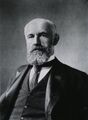 G. Stanley Hall
 -
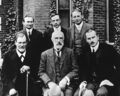 Hall, Freud, and Jung in front of Clark University, 1909


Sponsored Health Resource

W8MD Weight Loss, Sleep & MedSpa
Looking for physician-supervised weight loss, semaglutide, tirzepatide, or GLP-1 receptor agonist options? W8MD helps eligible patients in New York City, Brooklyn, New Jersey, Connecticut, Pennsylvania, Delaware, and greater Philadelphia with medical weight loss, sleep medicine, and long-term maintenance support.
GLP-1 specials: Affordable GLP-1 injections NYC and Philadelphia starting from $29.99/week and up for semaglutide with insurance accepted for qualifying visits, and $45/week and up for tirzepatide with insurance accepted for qualifying visits. Self-pay options start from $59.99/week and up for semaglutide and $69.99/week and up for tirzepatide.
- Medical weight loss NYC
- Affordable GLP-1 injections NYC
- Budget GLP-1 weight loss shots Philadelphia
- New Jersey medical weight loss
- NYC medical weight loss blog
- Philadelphia weight loss blog
- Sleep medicine and sleep apnea services
- W8MD MedSpa and wellness
Book a W8MD appointment · View GLP-1 specials
Paid promotional message. Eligibility, pricing, insurance coverage, medication availability, and results vary. Medical evaluation required.

Medical Disclaimer: WikiMD is for informational purposes only and is not a substitute for professional medical advice. Content may be inaccurate or outdated and should not be used for diagnosis or treatment. Always consult your healthcare provider for medical decisions. Verify information with trusted sources such as CDC.gov and NIH.gov. By using this site, you agree that WikiMD is not liable for any outcomes related to its content. See full disclaimer.
Credits:Most images are courtesy of Wikimedia commons, and templates, categories Wikipedia, licensed under CC BY SA or similar.
Translate page: - East Asian
中文,
日本,
한국어,
South Asian
हिन्दी,
தமிழ்,
తెలుగు,
Urdu,
ಕನ್ನಡ,
Southeast Asian
Indonesian,
Vietnamese,
Thai,
မြန်မာဘာသာ,
বাংলা
European
español,
Deutsch,
français,
Greek,
português do Brasil,
polski,
română,
русский,
Nederlands,
norsk,
svenska,
suomi,
Italian
Middle Eastern & African
عربى,
Turkish,
Persian,
Hebrew,
Afrikaans,
isiZulu,
Kiswahili,
Other
Bulgarian,
Hungarian,
Czech,
Swedish,
മലയാളം,
मराठी,
ਪੰਜਾਬੀ,
ગુજરાતી,
Portuguese,
Ukrainian

