Fusobacteriota
A phylum of bacteria
Overview[edit]
Fusobacteriota is a phylum of Gram-negative bacteria that are anaerobic and non-spore forming. These bacteria are known for their spindle-shaped morphology and are commonly found in the human oral cavity, gastrointestinal tract, and other mucosal surfaces. They play a significant role in human health and disease, particularly in periodontal disease and other infections.
Characteristics[edit]
Fusobacteriota are characterized by their elongated, spindle-shaped cells. They are obligate anaerobes, meaning they thrive in environments devoid of oxygen. The cell wall structure of Fusobacteriota is typical of Gram-negative bacteria, with a thin peptidoglycan layer and an outer membrane containing lipopolysaccharides.
Pathogenicity[edit]
Fusobacteriota are associated with various human diseases. They are implicated in periodontal disease, where they contribute to the formation of dental plaque and inflammation of the gums. Additionally, some species, such as Fusobacterium necrophorum, are known to cause Lemierre's syndrome, a rare but serious condition characterized by thrombophlebitis of the internal jugular vein.
Ecological Role[edit]
In the human body, Fusobacteriota are part of the normal microbiota of the oral cavity and gastrointestinal tract. They play a role in maintaining the balance of microbial communities and can influence the host's immune response. However, when the balance is disrupted, they can become opportunistic pathogens.
Species[edit]
The phylum Fusobacteriota includes several genera, with Fusobacterium being the most well-known. Other genera include Leptotrichia and Sneathia. Each genus contains multiple species, some of which are pathogenic to humans.
Research and Clinical Implications[edit]
Research into Fusobacteriota has increased due to their association with various diseases. Understanding their role in the human microbiome and their pathogenic mechanisms is crucial for developing new therapeutic strategies. Studies have also explored the potential link between Fusobacteriota and colorectal cancer, suggesting that these bacteria may influence tumor development and progression.
Related pages[edit]
-
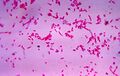 Fusobacterium novum

Sponsored Health Resource

W8MD Weight Loss, Sleep & MedSpa
Looking for physician-supervised weight loss, semaglutide, tirzepatide, or GLP-1 receptor agonist options? W8MD helps eligible patients in New York City, Brooklyn, New Jersey, Connecticut, Pennsylvania, Delaware, and greater Philadelphia with medical weight loss, sleep medicine, and long-term maintenance support.
GLP-1 specials: Affordable GLP-1 injections NYC and Philadelphia starting from $29.99/week and up for semaglutide with insurance accepted for qualifying visits, and $45/week and up for tirzepatide with insurance accepted for qualifying visits. Self-pay options start from $59.99/week and up for semaglutide and $69.99/week and up for tirzepatide.
Medical weight loss NYC | Affordable GLP-1 injections NYC | Budget GLP-1 weight loss shots Philadelphia | New Jersey medical weight loss | NYC medical weight loss | Philadelphia medical weight loss | Sleep clinic NYC | W8MD's Philadelphia GLP-1 doctor | Weight loss prescriptions NYC
Book a W8MD appointment · View GLP-1 specials
Paid promotional message. Eligibility, pricing, insurance coverage, medication availability, and results vary. Medical evaluation required.

Medical Disclaimer: WikiMD is for informational purposes only and is not a substitute for professional medical advice. Content may be inaccurate or outdated and should not be used for diagnosis or treatment. Always consult your healthcare provider for medical decisions. Verify information with trusted sources such as CDC.gov and NIH.gov. By using this site, you agree that WikiMD is not liable for any outcomes related to its content. See full disclaimer.
Credits:Most images are courtesy of Wikimedia commons, and templates, categories Wikipedia, licensed under CC BY SA or similar.
Translate page: - East Asian
中文,
日本,
한국어,
South Asian
हिन्दी,
தமிழ்,
తెలుగు,
Urdu,
ಕನ್ನಡ,
Southeast Asian
Indonesian,
Vietnamese,
Thai,
မြန်မာဘာသာ,
বাংলা
European
español,
Deutsch,
français,
Greek,
português do Brasil,
polski,
română,
русский,
Nederlands,
norsk,
svenska,
suomi,
Italian
Middle Eastern & African
عربى,
Turkish,
Persian,
Hebrew,
Afrikaans,
isiZulu,
Kiswahili,
Other
Bulgarian,
Hungarian,
Czech,
Swedish,
മലയാളം,
मराठी,
ਪੰਜਾਬੀ,
ગુજરાતી,
Portuguese,
Ukrainian

