Gastric glands
Encyclopedia article about gastric glands
The gastric glands are specialized structures located in the lining of the stomach. They play a crucial role in the digestive process by secreting various substances necessary for digestion. These glands are embedded in the mucosa of the stomach and are responsible for producing gastric juice, which contains hydrochloric acid and digestive enzymes.
Structure[edit]
The gastric glands are found in the gastric pits of the stomach lining. They are composed of different types of cells, each with a specific function. The main types of cells found in the gastric glands include:
- Parietal cells: These cells secrete hydrochloric acid (HCl), which helps maintain the acidic environment of the stomach. This acidic environment is essential for the activation of pepsinogen into pepsin, an enzyme that digests proteins.
- Chief cells: Also known as zymogenic cells, chief cells produce pepsinogen, the inactive precursor of pepsin. Once secreted, pepsinogen is activated by the acidic pH in the stomach.
- Mucous cells: These cells secrete mucus, which forms a protective layer on the stomach lining, preventing damage from the acidic gastric juice.
- G cells: These are enteroendocrine cells that secrete gastrin, a hormone that stimulates the secretion of gastric acid by the parietal cells.
Function[edit]
The primary function of the gastric glands is to facilitate digestion by secreting gastric juice. The components of gastric juice include:
- Hydrochloric acid: Lowers the pH of the stomach, creating an acidic environment that is optimal for enzyme activity and helps kill bacteria.
- Pepsinogen: Converted to pepsin in the acidic environment, it breaks down proteins into smaller peptides.
- Intrinsic factor: Secreted by parietal cells, it is essential for the absorption of vitamin B12 in the small intestine.
- Mucus: Protects the stomach lining from the corrosive effects of gastric acid.
Clinical Significance[edit]
Disorders of the gastric glands can lead to various medical conditions. For example, excessive secretion of gastric acid can result in peptic ulcers, while insufficient secretion can lead to achlorhydria and pernicious anemia due to lack of intrinsic factor.
Gallery[edit]
-
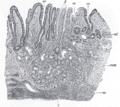 Diagram of gastric glands
 -
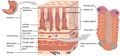 Histology of stomach
 -
 Histology of normal antral mucosa
 -
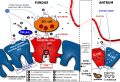 Determinants of gastric acid secretion
 -
 Histology of gastric chief cell
 -
 Parietal cell
 -
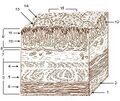 Illustration of stomach layers
 -
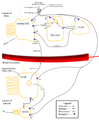 Control of stomach acid secretion
 -
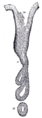 Diagram of gastric glands


Related Pages[edit]
Medical Disclaimer: WikiMD is for informational purposes only and is not a substitute for professional medical advice. Content may be inaccurate or outdated and should not be used for diagnosis or treatment. Always consult your healthcare provider for medical decisions. Verify information with trusted sources such as CDC.gov and NIH.gov. By using this site, you agree that WikiMD is not liable for any outcomes related to its content. See full disclaimer.
Credits:Most images are courtesy of Wikimedia commons, and templates, categories Wikipedia, licensed under CC BY SA or similar.
Translate this page: - East Asian
中文,
日本,
한국어,
South Asian
हिन्दी,
தமிழ்,
తెలుగు,
Urdu,
ಕನ್ನಡ,
Southeast Asian
Indonesian,
Vietnamese,
Thai,
မြန်မာဘာသာ,
বাংলা
European
español,
Deutsch,
français,
Greek,
português do Brasil,
polski,
română,
русский,
Nederlands,
norsk,
svenska,
suomi,
Italian
Middle Eastern & African
عربى,
Turkish,
Persian,
Hebrew,
Afrikaans,
isiZulu,
Kiswahili,
Other
Bulgarian,
Hungarian,
Czech,
Swedish,
മലയാളം,
मराठी,
ਪੰਜਾਬੀ,
ગુજરાતી,
Portuguese,
Ukrainian

