Radical polymerization
Radical polymerization is a type of polymerization in which the polymer molecules are formed by the successive addition of radicals. This process is one of the most common methods used to produce polymers and plays a crucial role in the manufacturing of a wide variety of materials, from plastics to rubbers.
Mechanism[edit]
Radical polymerization involves three main steps: initiation, propagation, and termination.
Initiation[edit]
The initiation step begins with the generation of radicals, typically through the decomposition of a radical initiator. Common initiators include organic peroxides and azo compounds, which decompose thermally or under UV light to produce radicals.
Propagation[edit]
Once radicals are generated, the propagation step occurs. In this phase, the radical adds to an unsaturated monomer unit, creating a new radical. This new radical can then react with another monomer, leading to a chain reaction that results in the rapid growth of the polymer chain.
Termination[edit]
The termination step concludes the polymerization process. Termination can occur in several ways, including combination (where two radical chains join together) or disproportionation (where one radical chain transfers a hydrogen atom to another, creating a saturated and an unsaturated end).
Types of Radical Polymerization[edit]
There are several types of radical polymerization, including:
- Bulk polymerization: Polymerization without any solvent, where the monomer itself acts as the medium.
- Solution polymerization: Polymerization in the presence of a solvent that dissolves both the monomer and the polymer.
- Suspension polymerization: Monomer droplets are suspended in a water phase, with polymerization occurring within the droplets.
- Emulsion polymerization: Similar to suspension polymerization, but with the addition of a surfactant to stabilize the monomer droplets.
Applications[edit]
Radical polymerization is used to produce a wide range of materials, including plastics, rubbers, and coatings. It is particularly useful for producing polymers with specific properties, such as high strength, flexibility, or resistance to chemicals and temperature.
Advantages and Disadvantages[edit]
The main advantage of radical polymerization is its simplicity and versatility. It can be used with a wide variety of monomers and does not require strict conditions, making it suitable for large-scale production. However, it also has some disadvantages, such as the potential for uncontrollable reactions and difficulty in controlling the molecular weight distribution of the resulting polymers.
See Also[edit]

-
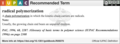 IUPAC definition for radical polymerization
 -
 Initiation - thermal decomposition
 -
 Initiation - photolysis
 -
 Initiation - persulfates
 -
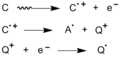 Initiation - ionizing radiation
 -
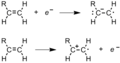 Initiation - electrochemical
 -
 Benzoyl peroxide + 3,6-bis(o-carboxybenzoyl)-N-isopropylcarbazole + di-η5-indenylzicronium dichloride
 -
 Initiation - primary recombination
 -
 Initiation - other recombination
 -
 Initiation - part 2


-N-isopropylcarbazole_%2B_di-%CE%B75-indenylzicronium_dichloride.svg)


Medical Disclaimer: WikiMD is for informational purposes only and is not a substitute for professional medical advice. Content may be inaccurate or outdated and should not be used for diagnosis or treatment. Always consult your healthcare provider for medical decisions. Verify information with trusted sources such as CDC.gov and NIH.gov. By using this site, you agree that WikiMD is not liable for any outcomes related to its content. See full disclaimer.
Credits:Most images are courtesy of Wikimedia commons, and templates, categories Wikipedia, licensed under CC BY SA or similar.
Translate page: - East Asian
中文,
日本,
한국어,
South Asian
हिन्दी,
தமிழ்,
తెలుగు,
Urdu,
ಕನ್ನಡ,
Southeast Asian
Indonesian,
Vietnamese,
Thai,
မြန်မာဘာသာ,
বাংলা
European
español,
Deutsch,
français,
Greek,
português do Brasil,
polski,
română,
русский,
Nederlands,
norsk,
svenska,
suomi,
Italian
Middle Eastern & African
عربى,
Turkish,
Persian,
Hebrew,
Afrikaans,
isiZulu,
Kiswahili,
Other
Bulgarian,
Hungarian,
Czech,
Swedish,
മലയാളം,
मराठी,
ਪੰਜਾਬੀ,
ગુજરાતી,
Portuguese,
Ukrainian

