Folding@home
Folding@home (often abbreviated as F@h or FAH) is a distributed computing project for disease research that simulates protein folding, computational drug design, and other types of molecular dynamics. The project uses the idle processing resources of thousands of personal computers owned by volunteers who have installed the software on their systems. Folding@home aims to understand protein folding and misfolding, and how these are related to diseases and the development of new therapeutics.
Overview[edit]
Protein folding is the process by which a protein structure assumes its functional shape or conformation. Misfolding of proteins is a cause of many diseases, including Alzheimer's, Huntington's, and many forms of cancer. By simulating the complex process of protein folding, Folding@home helps scientists understand disease mechanisms at the molecular level, which is the first step in developing effective treatments.
The project was launched on October 1, 2000, by the Pande Lab at Stanford University. Since then, it has grown into one of the world's largest distributed computing projects. The Folding@home software allows participants to contribute by running simulations of protein dynamics on their personal computers. The results are sent back to the Folding@home team and contribute to academic research papers on the topics of biochemistry and molecular biology.
How it Works[edit]
Participants download the Folding@home software and install it on their computers. The software downloads small pieces of a simulation project from the Folding@home servers and performs calculations on them. These calculations are then sent back to the servers. The process is automatic, and the software can be configured to run only when the computer is idle.
The simulations performed by Folding@home are examples of molecular dynamics simulations, which are highly computation-intensive. By distributing these calculations across thousands of computers, Folding@home can simulate processes that would take centuries to complete on a single machine.
Research and Impact[edit]
Folding@home has contributed to significant advances in the understanding of various diseases. Its simulations have helped to uncover the mechanisms of protein folding and misfolding, and how these processes relate to disease and treatment. The project has contributed to research in the fields of Alzheimer's disease, cancer, COVID-19, and many others.
Participation[edit]
Anyone with a computer and an internet connection can participate in Folding@home. The project attracts a wide range of participants, from individuals to large organizations. Schools, businesses, and even government entities have contributed computing resources to the project.
See Also[edit]
External Links[edit]

-
 Folding@home Logo
 -
 Protein Folding
 -
 ACBP MSM from Folding@home
 -
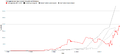 Folding@home and Supercomputer Computational Powers
 -
 Folding@home on Fedora 25
 -
Life With PlayStation Folding
-
 F@h v7 Novice Shot


Ad. Transform your life with W8MD's Budget GLP-1 injections from $75


W8MD offers a medical weight loss program to lose weight in Philadelphia. Our physician-supervised medical weight loss provides:
- Weight loss injections in NYC (generic and brand names):
- Zepbound / Mounjaro, Wegovy / Ozempic, Saxenda
- Most insurances accepted or discounted self-pay rates. We will obtain insurance prior authorizations if needed.
- Generic GLP1 weight loss injections from $75 for the starting dose.
- Also offer prescription weight loss medications including Phentermine, Qsymia, Diethylpropion, Contrave etc.
NYC weight loss doctor appointmentsNYC weight loss doctor appointments
Start your NYC weight loss journey today at our NYC medical weight loss and Philadelphia medical weight loss clinics.
- Call 718-946-5500 to lose weight in NYC or for medical weight loss in Philadelphia 215-676-2334.
- Tags:NYC medical weight loss, Philadelphia lose weight Zepbound NYC, Budget GLP1 weight loss injections, Wegovy Philadelphia, Wegovy NYC, Philadelphia medical weight loss, Brookly weight loss and Wegovy NYC


|
WikiMD's Wellness Encyclopedia |
| Let Food Be Thy Medicine Medicine Thy Food - Hippocrates |
Medical Disclaimer: WikiMD is not a substitute for professional medical advice. The information on WikiMD is provided as an information resource only, may be incorrect, outdated or misleading, and is not to be used or relied on for any diagnostic or treatment purposes. Please consult your health care provider before making any healthcare decisions or for guidance about a specific medical condition. WikiMD expressly disclaims responsibility, and shall have no liability, for any damages, loss, injury, or liability whatsoever suffered as a result of your reliance on the information contained in this site. By visiting this site you agree to the foregoing terms and conditions, which may from time to time be changed or supplemented by WikiMD. If you do not agree to the foregoing terms and conditions, you should not enter or use this site. See full disclaimer.
Credits:Most images are courtesy of Wikimedia commons, and templates, categories Wikipedia, licensed under CC BY SA or similar.
Translate this page: - East Asian
中文,
日本,
한국어,
South Asian
हिन्दी,
தமிழ்,
తెలుగు,
Urdu,
ಕನ್ನಡ,
Southeast Asian
Indonesian,
Vietnamese,
Thai,
မြန်မာဘာသာ,
বাংলা
European
español,
Deutsch,
français,
Greek,
português do Brasil,
polski,
română,
русский,
Nederlands,
norsk,
svenska,
suomi,
Italian
Middle Eastern & African
عربى,
Turkish,
Persian,
Hebrew,
Afrikaans,
isiZulu,
Kiswahili,
Other
Bulgarian,
Hungarian,
Czech,
Swedish,
മലയാളം,
मराठी,
ਪੰਜਾਬੀ,
ગુજરાતી,
Portuguese,
Ukrainian

