Flavin group
Flavin group refers to a family of organic compounds based on pteridine, which are derived from riboflavin (vitamin B2). These molecules play crucial roles in biochemistry, particularly in redox reactions, which are chemical reactions involving the transfer of electrons. The flavin group includes flavin mononucleotide (FMN) and flavin adenine dinucleotide (FAD), both of which are essential for the biological activities of flavoproteins.
Structure and Properties[edit]
The basic structure of flavin molecules consists of an isoalloxazine ring, a three-ring system with nitrogen at the 1 and 5 positions. This structure is capable of undergoing oxidation-reduction reactions, making flavins versatile cofactors in biological systems. Flavins are yellow compounds, and their color changes depending on the oxidation state, which is a useful property in laboratory assays to monitor redox reactions.
Biological Role[edit]
Flavins are critical for the metabolism of carbohydrates, fats, and proteins. They act as electron carriers in various biochemical pathways, including cellular respiration and photosynthesis. In the electron transport chain, flavoproteins transfer electrons from substrates to other molecules, such as cytochromes, thereby contributing to the generation of ATP, the energy currency of the cell.
Flavoproteins[edit]
Flavoproteins are proteins that contain a flavin group as a prosthetic group. These proteins are involved in a wide range of biological processes, including DNA repair, light emission in bioluminescence, and the detoxification of free radicals. The versatility of flavoproteins is largely due to the diverse chemical reactions facilitated by the flavin cofactor, including oxidation-reduction, deamination, and decarboxylation reactions.
Health Implications[edit]
Adequate intake of riboflavin is essential for the synthesis of FMN and FAD, and consequently, for the proper functioning of flavoproteins. Riboflavin deficiency can lead to various health issues, including skin disorders, hyperemia, edema of the mouth and throat, and even anemia. Riboflavin is found in various foods, including milk, meat, eggs, nuts, enriched flour, and green vegetables.
Synthesis and Industrial Applications[edit]
While flavins are naturally occurring, they can also be synthesized in the laboratory. Synthetic flavins are used in various industrial applications, including the development of fluorescent dyes and photocatalysts. In biotechnology, flavin-dependent enzymes are exploited for the biosynthesis of valuable chemicals and the bioremediation of environmental pollutants.
Conclusion[edit]
The flavin group encompasses a vital class of molecules in biochemistry, with significant implications for metabolism, health, and industrial applications. The study of flavins and flavoproteins continues to be a dynamic field of research, with ongoing discoveries regarding their mechanisms of action and potential uses in medicine and biotechnology.
.svg) | This biochemistry article is a stub. You can help WikiMD by expanding the page. |
-
 Flavin group
 -
 Riboflavin
 -
FAD FADH2 equilibrium
-
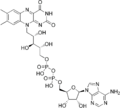 Flavin adenine dinucleotide
 -
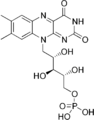 Flavin mononucleotide


Medical Disclaimer: WikiMD is for informational purposes only and is not a substitute for professional medical advice. Content may be inaccurate or outdated and should not be used for diagnosis or treatment. Always consult your healthcare provider for medical decisions. Verify information with trusted sources such as CDC.gov and NIH.gov. By using this site, you agree that WikiMD is not liable for any outcomes related to its content. See full disclaimer.
Credits:Most images are courtesy of Wikimedia commons, and templates, categories Wikipedia, licensed under CC BY SA or similar.
Translate page: - East Asian
中文,
日本,
한국어,
South Asian
हिन्दी,
தமிழ்,
తెలుగు,
Urdu,
ಕನ್ನಡ,
Southeast Asian
Indonesian,
Vietnamese,
Thai,
မြန်မာဘာသာ,
বাংলা
European
español,
Deutsch,
français,
Greek,
português do Brasil,
polski,
română,
русский,
Nederlands,
norsk,
svenska,
suomi,
Italian
Middle Eastern & African
عربى,
Turkish,
Persian,
Hebrew,
Afrikaans,
isiZulu,
Kiswahili,
Other
Bulgarian,
Hungarian,
Czech,
Swedish,
മലയാളം,
मराठी,
ਪੰਜਾਬੀ,
ગુજરાતી,
Portuguese,
Ukrainian


