Flammable liquid

Flammable liquids are liquids that can ignite and continue to burn in air at a specific temperature. The flammability of a liquid is determined by its flash point, which is the lowest temperature at which it can form an ignitable mixture in air. Managing the risks associated with flammable liquids requires understanding their properties, including volatility, flash point, and autoignition temperature.
Properties[edit]
Flammable liquids have a flash point below 37.8°C (100°F). They are categorized into different classes based on their flash points and boiling points. The most common classification system is provided by the National Fire Protection Association (NFPA), which divides flammable liquids into four categories:
- Category 1: Liquids with flash points below 22.8°C (73°F) and boiling points at or below 35°C (95°F).
- Category 2: Liquids with flash points below 22.8°C (73°F) and boiling points above 35°C (95°F).
- Category 3: Liquids with flash points at or above 22.8°C (73°F) and below 37.8°C (100°F).
- Category 4: Liquids with flash points at or above 37.8°C (100°F) and below 60°C (140°F).
Hazards[edit]
The primary hazard associated with flammable liquids is the risk of fire and explosion. This risk is influenced by the liquid's vapor pressure, which determines how easily it produces flammable vapors. Higher vapor pressures indicate a greater risk of fire. Flammable liquids can also pose health risks through inhalation of vapors, skin absorption, or ingestion.
Storage and Handling[edit]
Proper storage and handling of flammable liquids are critical to minimizing the risk of fire and explosion. Guidelines for safe storage include using approved flammable liquid storage cabinets, grounding and bonding containers to prevent static electricity, and maintaining proper ventilation. Handling precautions include using personal protective equipment (PPE), avoiding sources of ignition, and ensuring that spill containment measures are in place.
Regulations[edit]
In the United States, the Occupational Safety and Health Administration (OSHA) and the NFPA provide regulations and guidelines for the safe management of flammable liquids. These include standards for storage, handling, and transfer of flammable liquids, as well as requirements for employee training and emergency preparedness.
See Also[edit]

This WikiMD article can only be edited by registered and verified editors. You can log in or register.
-
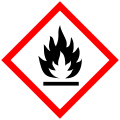 Flammable liquid
 -
 Flammable liquid


Medical Disclaimer: WikiMD is for informational purposes only and is not a substitute for professional medical advice. Content may be inaccurate or outdated and should not be used for diagnosis or treatment. Always consult your healthcare provider for medical decisions. Verify information with trusted sources such as CDC.gov and NIH.gov. By using this site, you agree that WikiMD is not liable for any outcomes related to its content. See full disclaimer.
Credits:Most images are courtesy of Wikimedia commons, and templates, categories Wikipedia, licensed under CC BY SA or similar.
Translate page: - East Asian
中文,
日本,
한국어,
South Asian
हिन्दी,
தமிழ்,
తెలుగు,
Urdu,
ಕನ್ನಡ,
Southeast Asian
Indonesian,
Vietnamese,
Thai,
မြန်မာဘာသာ,
বাংলা
European
español,
Deutsch,
français,
Greek,
português do Brasil,
polski,
română,
русский,
Nederlands,
norsk,
svenska,
suomi,
Italian
Middle Eastern & African
عربى,
Turkish,
Persian,
Hebrew,
Afrikaans,
isiZulu,
Kiswahili,
Other
Bulgarian,
Hungarian,
Czech,
Swedish,
മലയാളം,
मराठी,
ਪੰਜਾਬੀ,
ગુજરાતી,
Portuguese,
Ukrainian

