Fire Services Bureau
Fire Services Bureau is a government agency responsible for providing firefighting services, emergency medical services, and disaster management services. The bureau is typically responsible for fire prevention, fire suppression, and ensuring the safety and welfare of the public in the event of a fire.
History[edit]
The Fire Services Bureau has a long history dating back to the early days of organized firefighting. The bureau was initially established to provide a coordinated response to fires and other emergencies. Over the years, the role of the Fire Services Bureau has expanded to include a wide range of emergency services.
Functions[edit]
The primary function of the Fire Services Bureau is to provide firefighting services. This includes fire suppression, fire prevention, and fire safety education. The bureau is also responsible for providing emergency medical services, including ambulance services and paramedic services.
In addition to these primary functions, the Fire Services Bureau also plays a key role in disaster management. This includes planning for disasters, coordinating response efforts, and providing support to other emergency services during a disaster.
Structure[edit]
The Fire Services Bureau is typically structured into several divisions, each responsible for a specific aspect of the bureau's operations. These divisions may include a Fire Prevention Division, a Fire Suppression Division, an Emergency Medical Services Division, and a Disaster Management Division.
Training[edit]
Training is a critical aspect of the Fire Services Bureau's operations. Firefighters and other personnel are required to undergo rigorous training to ensure they are equipped to respond to a wide range of emergencies. This training typically includes both classroom instruction and practical exercises.
See also[edit]
References[edit]
<references />
 | This medical article is a stub. You can help WikiMD by expanding the page. |
-
 Macau Corps of Firefighters
 -
 Fire Department in Areia Preta
 -
 Macau Central Fire Station
 -
 Fire Department in UM Hengqin
 -
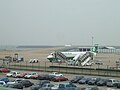 Macao Airport
 -
 Fire Engine in Macau
 -
 Fire Services Bureau


Medical Disclaimer: WikiMD is for informational purposes only and is not a substitute for professional medical advice. Content may be inaccurate or outdated and should not be used for diagnosis or treatment. Always consult your healthcare provider for medical decisions. Verify information with trusted sources such as CDC.gov and NIH.gov. By using this site, you agree that WikiMD is not liable for any outcomes related to its content. See full disclaimer.
Credits:Most images are courtesy of Wikimedia commons, and templates, categories Wikipedia, licensed under CC BY SA or similar.
Translate this page: - East Asian
中文,
日本,
한국어,
South Asian
हिन्दी,
தமிழ்,
తెలుగు,
Urdu,
ಕನ್ನಡ,
Southeast Asian
Indonesian,
Vietnamese,
Thai,
မြန်မာဘာသာ,
বাংলা
European
español,
Deutsch,
français,
Greek,
português do Brasil,
polski,
română,
русский,
Nederlands,
norsk,
svenska,
suomi,
Italian
Middle Eastern & African
عربى,
Turkish,
Persian,
Hebrew,
Afrikaans,
isiZulu,
Kiswahili,
Other
Bulgarian,
Hungarian,
Czech,
Swedish,
മലയാളം,
मराठी,
ਪੰਜਾਬੀ,
ગુજરાતી,
Portuguese,
Ukrainian
