Fingerling potato
Fingerling potatoes are a small, narrow, and finger-shaped type of potato which is prized for its flavor and firm texture. Unlike larger potato varieties, fingerlings are harvested when they are fully mature, making them rich in flavor and less starchy than their larger counterparts. They are considered a gourmet food item and are often used in salads, roasted, or simply boiled and dressed with butter and herbs.
Characteristics[edit]
Fingerling potatoes come in a variety of colors, including yellow, red, purple, and even some with a combination of colors. The skin is thin and the flesh is creamy and dense, which allows them to hold their shape well during cooking. This makes them particularly suitable for roasting and boiling. Their unique size and shape, along with their rich flavor, make them a favorite among chefs and home cooks alike.
Cultivation[edit]
Fingerling potatoes are grown in a manner similar to other types of potatoes. They require well-drained soil and plenty of sunlight. However, due to their small size and the fact that they are harvested at full maturity, they can be more labor-intensive to grow and harvest than larger potato varieties. This can contribute to their higher price in the market.
Culinary Uses[edit]
Fingerling potatoes are versatile in the kitchen. They can be cooked in a variety of ways, including boiling, roasting, grilling, and sautéing. Their firm texture makes them an excellent choice for potato salads, as they hold their shape well and absorb dressings and flavors. Roasted fingerling potatoes, often seasoned with herbs and garlic, are a popular side dish that pairs well with a wide range of main courses.
Nutritional Value[edit]
Like other potatoes, fingerling potatoes are a good source of vitamins, minerals, and dietary fiber. They are particularly rich in vitamin C, potassium, and complex carbohydrates. They are also naturally gluten-free, making them a suitable food choice for those with gluten sensitivities or celiac disease.
Varieties[edit]
There are several varieties of fingerling potatoes, each with its own unique flavor and color. Some of the most popular varieties include:
- Russian Banana: Known for its banana-like shape and yellow flesh.
- French Fingerling: Characterized by its red skin and yellow flesh, with a slightly nutty flavor.
- Purple Peruvian: Notable for its deep purple skin and flesh, with a slightly earthy flavor.
- La Ratte: A French variety with a nutty flavor and smooth, buttery texture.
Storage[edit]
Fingerling potatoes should be stored in a cool, dark place with good ventilation. They should not be washed before storage, as moisture can lead to spoilage. Properly stored, they can last for several weeks.
Conclusion[edit]
Fingerling potatoes offer a unique combination of flavor, texture, and versatility in the kitchen. Their gourmet status and variety of uses make them a favorite among food enthusiasts. Whether roasted, boiled, or used in a salad, these small potatoes pack a flavorful punch that enhances any meal.

-
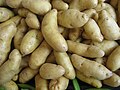 Fingerling potatoes at Pike Place Market


Medical Disclaimer: WikiMD is for informational purposes only and is not a substitute for professional medical advice. Content may be inaccurate or outdated and should not be used for diagnosis or treatment. Always consult your healthcare provider for medical decisions. Verify information with trusted sources such as CDC.gov and NIH.gov. By using this site, you agree that WikiMD is not liable for any outcomes related to its content. See full disclaimer.
Credits:Most images are courtesy of Wikimedia commons, and templates, categories Wikipedia, licensed under CC BY SA or similar.
Translate page: - East Asian
中文,
日本,
한국어,
South Asian
हिन्दी,
தமிழ்,
తెలుగు,
Urdu,
ಕನ್ನಡ,
Southeast Asian
Indonesian,
Vietnamese,
Thai,
မြန်မာဘာသာ,
বাংলা
European
español,
Deutsch,
français,
Greek,
português do Brasil,
polski,
română,
русский,
Nederlands,
norsk,
svenska,
suomi,
Italian
Middle Eastern & African
عربى,
Turkish,
Persian,
Hebrew,
Afrikaans,
isiZulu,
Kiswahili,
Other
Bulgarian,
Hungarian,
Czech,
Swedish,
മലയാളം,
मराठी,
ਪੰਜਾਬੀ,
ગુજરાતી,
Portuguese,
Ukrainian

