Falx
Falx is a term used in anatomy to describe a sickle-shaped structure. The term is derived from the Latin word for sickle. In the human body, there are two structures referred to as falx: the Falx cerebri and the Falx cerebelli.
Falx cerebri[edit]
The Falx cerebri is a large, crescent-shaped fold of meningeal layer of dura mater that descends vertically in the longitudinal fissure between the cerebral hemispheres. It is named for its sickle-like form. It is attached at the front to the crista galli of the ethmoid bone, and at the back to the tentorium cerebelli.
Falx cerebelli[edit]
The Falx cerebelli is a small sickle shaped fold of dura mater, projecting forwards into the posterior cerebellar notch and the vallecula of the cerebellum between the two cerebellar hemispheres.
Clinical significance[edit]
The falx cerebri and falx cerebelli are important anatomical landmarks in neurosurgery. They are often involved in cases of intracranial pressure, brain herniation, and meningioma, a type of brain tumor that can occur along the falx cerebri.
See also[edit]
References[edit]
External links[edit]
- WikiMD article on Falx

This WikiMD article can only be edited by registered and verified editors. You can log in or register.
-
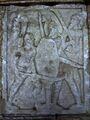 Falx
Falx -
Dacian Weapons
-
Falx
-
Falx
-
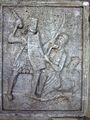 Falx
Falx -
Trajan Denarius, Roman Dacia, 107 AD
-
Roman Sculpture of a Woman with a Scythe
-
Mosaïque jeux du cirque


Medical Disclaimer: WikiMD is for informational purposes only and is not a substitute for professional medical advice. Content may be inaccurate or outdated and should not be used for diagnosis or treatment. Always consult your healthcare provider for medical decisions. Verify information with trusted sources such as CDC.gov and NIH.gov. By using this site, you agree that WikiMD is not liable for any outcomes related to its content. See full disclaimer.
Credits:Most images are courtesy of Wikimedia commons, and templates, categories Wikipedia, licensed under CC BY SA or similar.
Translate page: - East Asian
中文,
日本,
한국어,
South Asian
हिन्दी,
தமிழ்,
తెలుగు,
Urdu,
ಕನ್ನಡ,
Southeast Asian
Indonesian,
Vietnamese,
Thai,
မြန်မာဘာသာ,
বাংলা
European
español,
Deutsch,
français,
Greek,
português do Brasil,
polski,
română,
русский,
Nederlands,
norsk,
svenska,
suomi,
Italian
Middle Eastern & African
عربى,
Turkish,
Persian,
Hebrew,
Afrikaans,
isiZulu,
Kiswahili,
Other
Bulgarian,
Hungarian,
Czech,
Swedish,
മലയാളം,
मराठी,
ਪੰਜਾਬੀ,
ગુજરાતી,
Portuguese,
Ukrainian


_from_the_Hadrianeum_(Temple_of_the_Divine_Hadrian)_145_AD,_Palazzo_Massimo_alle_Terme,_Rome_(8508913059).jpg)
